Oaxaca Mexico smells like woodsmoke, chocolate, and roasting chiles, and it hits you the moment you step into the old center. I came for the food and the ruins. I stayed an extra three days because of a wallet I left on the wrong counter, and the people who refused to let that ruin my trip.
This is the story of that wallet, a grill cook who said “pay me tomorrow,” and the family who took me up a mountain. The practical part comes after.
Smoke, tlayudas, and an empty pocket
Mercado 20 de Noviembre sits a couple of blocks south of the Zócalo, and every guidebook sends you to the same corridor inside it: the smoke aisle. You walk through a haze of charcoal, point at strips of beef, pork, and chorizo, and they go straight onto the grill. Other vendors sell tortillas, salsa, and grilled onions and chiles.
I had my basket piled high before I reached for my wallet. My pocket was empty. So was my daypack. I patted myself down twice while my dinner sizzled.
The woman at the grill watched all of this with her tongs in the air. Her name, I learned later, was Doña Chela, and she had been cooking in that aisle since before I was born. She asked where I’d been that afternoon. I told her, in clumsy Spanish, that I’d been drinking mezcal at a tiny shop in Jalatlaco.
“Then it’s in Jalatlaco,” she said, as if that settled it. She wrapped my meat in paper, added tortillas and a bag of salsa, and pushed it across the counter. “Eat. Pay me tomorrow.” When I protested, she simply turned back to the grill.
The mezcal shop in Jalatlaco
Jalatlaco is one of the oldest neighborhoods in the city, a short walk east of the center: cobblestone lanes, low houses painted red and yellow and blue, and papel picado strung between the rooftops. By night it was quiet, and I was not sure I could find the shop again.
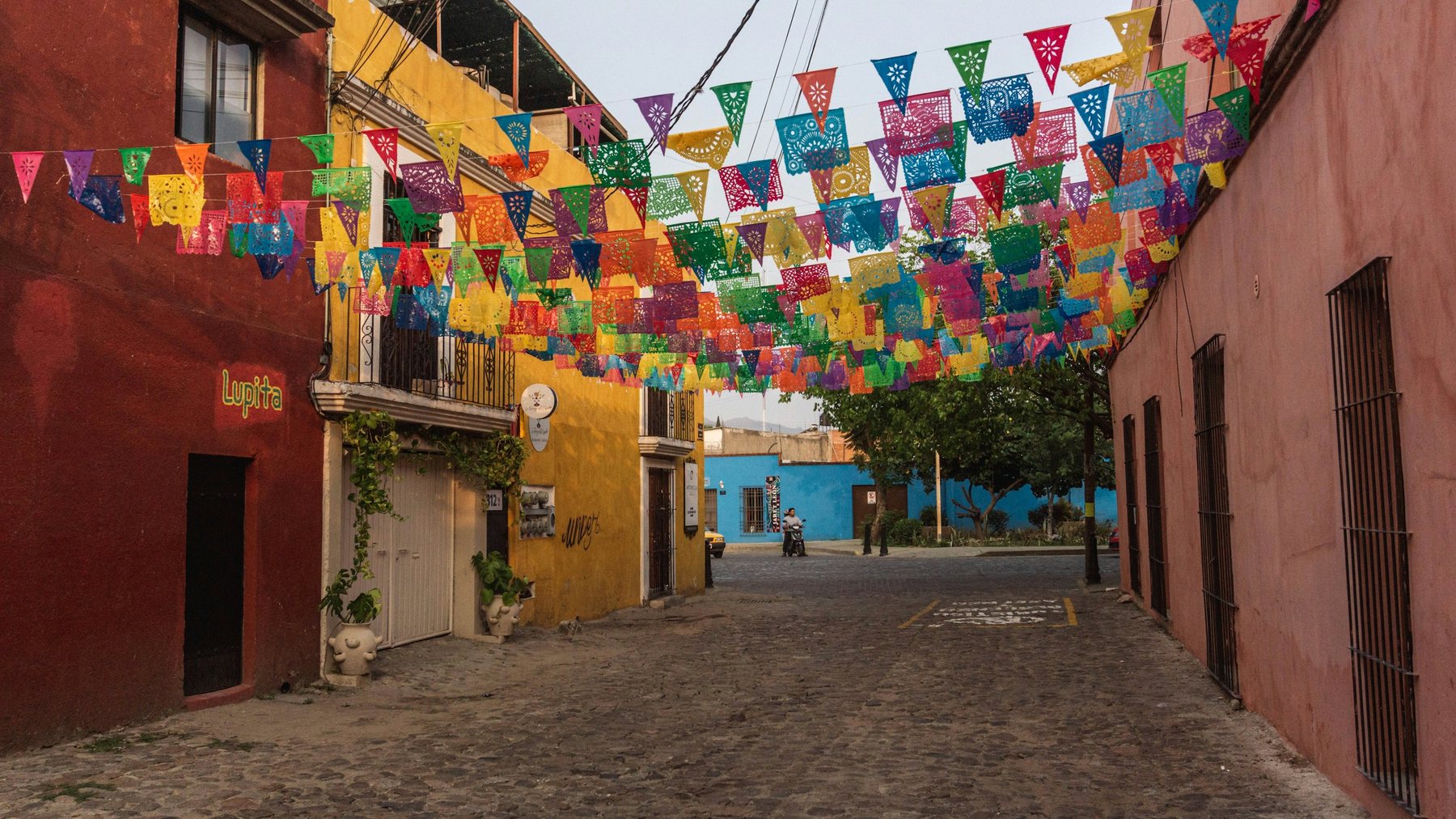
I did, eventually, by the bottles in the window. The owner, Don Teodoro, was pulling down the shutter. He saw me, laughed, and reached under the counter. My wallet was there, wrapped in a rubber band with a note that said la güera de las preguntas, roughly “the fair-haired one with all the questions.” Everything was inside.
He would not take a reward. Instead he poured two small copitas and told me how roasting agave hearts gives mezcal its smoky taste. When I said I wanted to see Monte Albán, he frowned. “Not with a tour bus at noon,” he said. “My granddaughter will take you. Early.”
The next morning I went back to the market first. Doña Chela took my money, waved off the extra I tried to add, and handed me a cup of hot chocolate, made with water the traditional way, for the road.
Monte Albán before the crowds
Ximena, Don Teodoro’s granddaughter, was studying archaeology and had opinions about every stone. We caught an early shuttle up the mountain west of the city and were walking onto the Main Plaza soon after the gates opened.
Monte Albán was a great Zapotec city, built on a leveled mountaintop above three valleys, and it is part of a UNESCO World Heritage site together with the historic center of Oaxaca. Ximena showed me the ball court, then the carved figures known as the Danzantes, and then marched me up the steps of the South Platform. From the top, the whole valley spread out below us, the city small and pale in the distance.
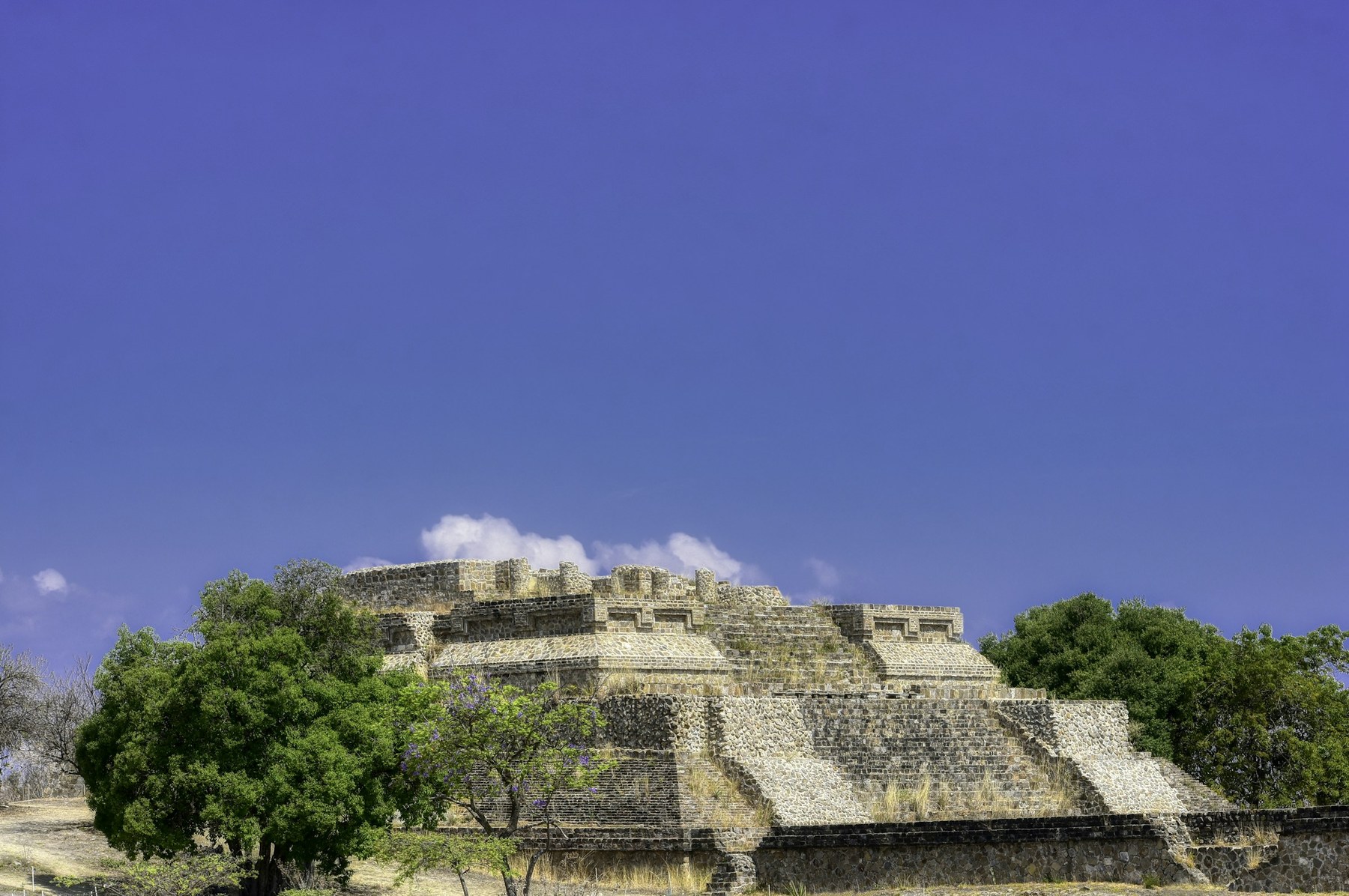
“People come for an hour and leave,” she said. “You should sit.” So we sat, and ate the tamales her mother had sent, and watched the shadows shorten across the plaza.
Rodrigo’s road to Hierve el Agua
By then the family had adopted me. Ximena’s uncle Rodrigo drove a taxi, and on my last full day he took me east through the valley. We stopped at the enormous Tule tree in Santa María del Tule, then at a weaving workshop in Teotitlán del Valle, where his cousin showed me wool dyed with marigold and cochineal.
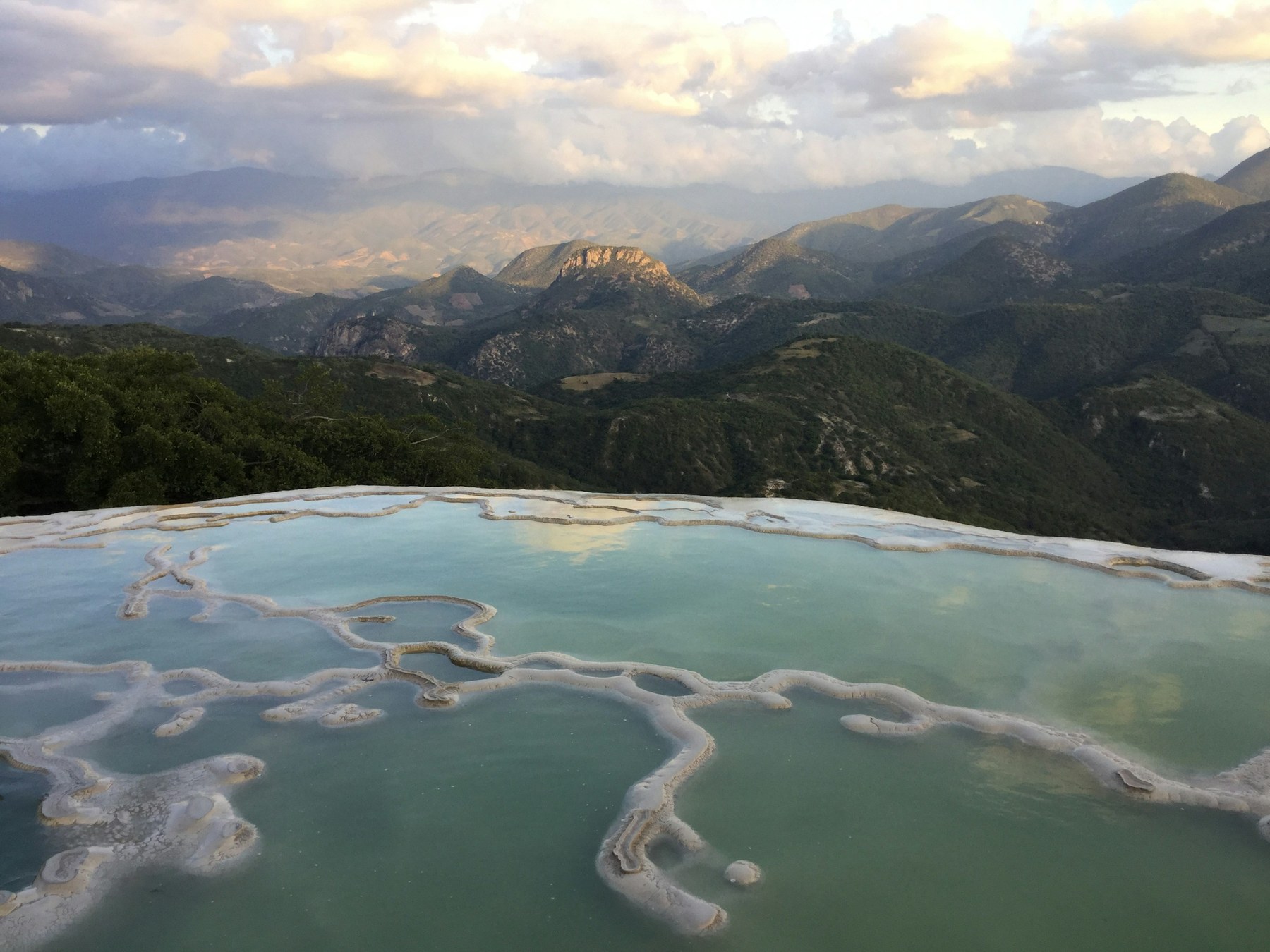
The last stretch to Hierve el Agua is a winding mountain road. At the end are mineral springs that have built up white formations over the cliff edge that look like frozen waterfalls, with natural pools perched above the valley. I swam while Rodrigo, who had seen it a hundred times, drank a soda and named the far ridges.
Planning a trip to Oaxaca Mexico
Oaxaca de Juárez, usually just called Oaxaca, is the capital of the state of the same name in southern Mexico. Plan at least four nights: two for the city and markets, and two for day trips into the valleys.
Getting there
Oaxaca’s international airport has frequent flights from Mexico City, and some direct routes from the US. Long-distance buses also run from Mexico City; the ride takes six hours or more, so many people fly at least one way.
Where to stay and eat
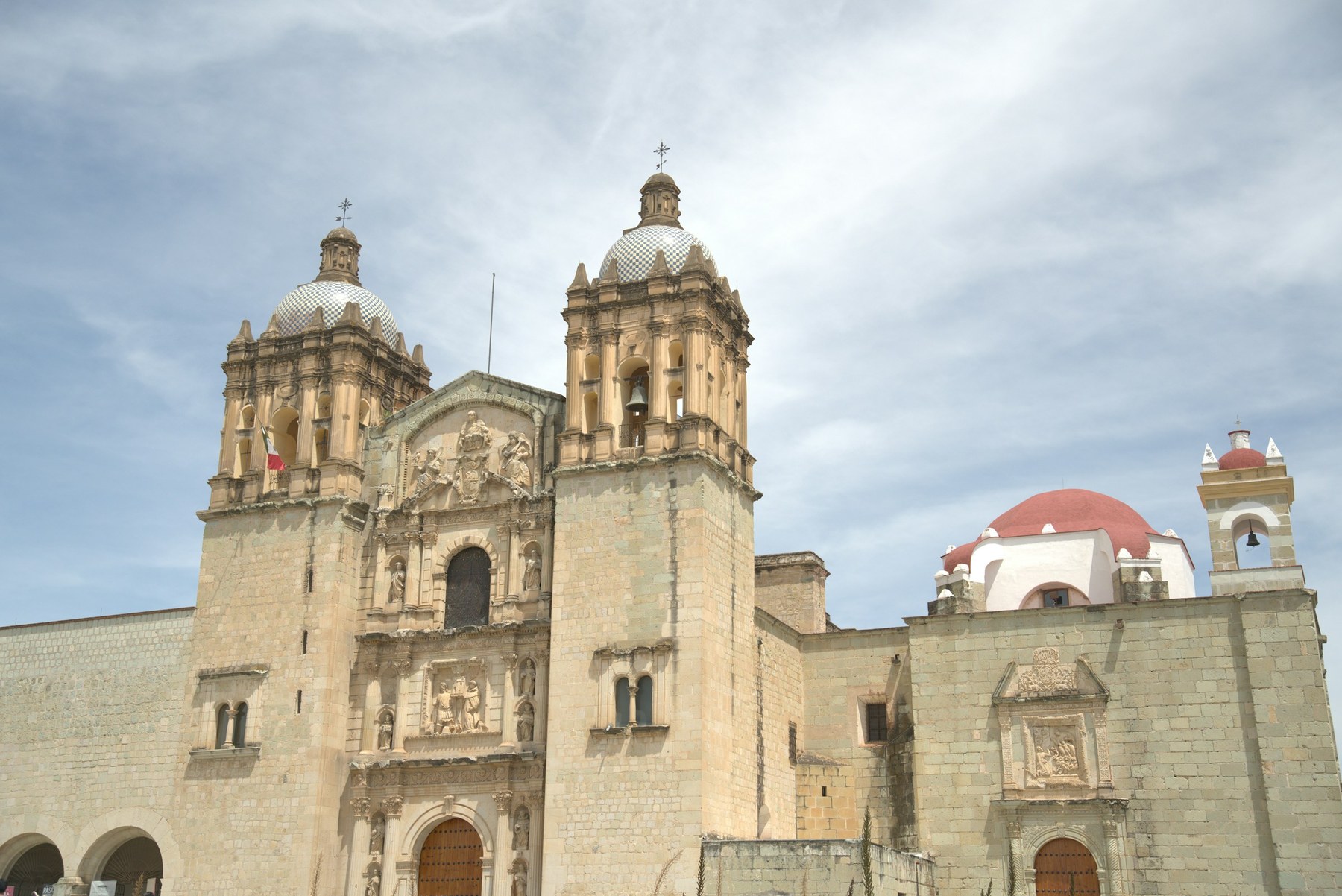
Stay in the historic center or in Jalatlaco, both walkable to the Zócalo and the Templo de Santo Domingo. Eat at Mercado 20 de Noviembre and the neighboring Mercado Benito Juárez, try a tlayuda and at least one mole, and leave room for hot chocolate.
When to go
The dry season, roughly November to April, brings sunny days and cool nights. Summer is the rainy season, but it is also when the Guelaguetza festival fills the city in July. Día de Muertos, around the start of November, is beautiful and busy, so book early.
Practical tips
- Carry cash, and keep it in one place: Markets and small shops prefer pesos. Split your money between two pockets, and learn from me. This guide to what I wish I knew before my first solo trip has more habits like that.
- Pack for sun and altitude: The city sits high in the mountains, so days are bright and evenings get cool. A hat, sunscreen, and a light layer cover it. My notes on packing light for a month-long trip cover the rest.
- Check before you go to Hierve el Agua: The site is run by local communities and access has closed at short notice before, so ask your host or driver the day before. Sunscreen is not allowed in the pools.
What a lost wallet bought me
Like my snapped key in Mostar and the broken strap in Salento, the mistake turned out to be the door. Without it, I would have eaten my grilled meat, taken a bus to the ruins at noon, and flown home with photos and no names.
Instead, I left with a bag of chocolate from Doña Chela, a bottle from Don Teodoro, and a message from Ximena telling me which mole I had to try next time. I still keep my cash in two pockets. I also keep the rubber band.
Frequently asked questions
How many days do you need in Oaxaca?
Four or five nights is a good start. Spend two days on the city, its markets, and Santo Domingo, then add day trips to Monte Albán and to Hierve el Agua and the villages east of the city.
How do you get from Oaxaca to Monte Albán?
Monte Albán sits on a mountain just west of the city. Shuttles leave from the center, and taxis and tours also go there. Arrive early for cooler weather and fewer people.
When is the best time to visit Oaxaca?
The dry season, roughly November to April, has the most reliable weather. July brings the Guelaguetza festival, and Día de Muertos around the start of November is popular, so book ahead for both.
Want someone to share the smoke aisle and the early shuttle with? Find a travel buddy who matches your dates and pace on Wander.
Keep reading
- Salento Colombia: a broken strap and a borrowed umbrella: more Latin American kindness, this time in coffee country
- Mostar Bosnia: a snapped key, strong coffee, and the old bridge: a broken key, a neighbor’s courtyard, and a famous bridge
- How Sarah met her travel buddy on Wander: for the next trip, when you’d rather have someone checking your pockets with you
Travel with Wander
Don’t go alone. Match with travelers who share your dates, pace, and places before you fly.