The secret to stress-free travel? Pack less. I learned that lesson the hard way, standing at a baggage carousel in Athens, watching it go around and around without my suitcase on it.
This is the story of the best thing that ever happened to my packing list. The practical part comes after, I promise.
Day one: the carousel stops
I had planned the trip for a year. Thirty days, starting in Greece, working north through Albania and Montenegro, and finishing in Serbia. (If you’re watching costs on a route like that, here’s how I tracked Europe on $50 a day.) I’d packed a 26-kilo suitcase for it. Four pairs of shoes. A hair dryer. Seven “nice” outfits for dinners I hadn’t booked. Three novels. A travel iron, which I’d like to state for the record that I have never once used.
At 11:40 p.m. the carousel stopped. A single orphaned stroller sat on it. My suitcase did not.
The woman at the lost-luggage desk was named Dimitra, and she had clearly had a long day. She typed my details into a system that looked older than me, printed a slip of paper, and said the words every traveler dreads: “We will call you.”
“When?” I asked.
She shrugged with her whole body. “When it is found.”
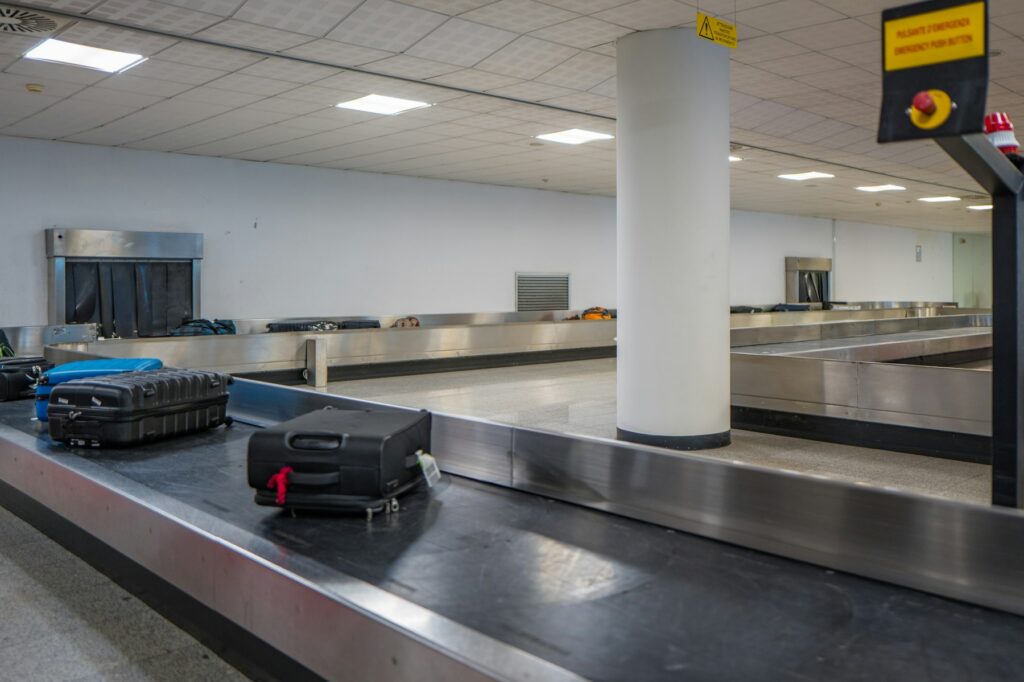
I walked out into the warm Athens night with my carry-on daypack, which contained: a phone, a charger, a passport, a toothbrush the airline gave me in a little kit, one paperback, and a cardigan. That was it. That was my entire wardrobe for an unknown amount of time.
The first week of panic
For the first three days, I stayed close to Athens and waited for a phone call that didn’t come. I bought two T-shirts, a pair of linen trousers, underwear, and a cheap pair of sandals from a market stall in Monastiraki. The man selling the sandals asked where my luggage was. When I told him, he laughed so hard he had to sit down, then gave me a discount “for the bad luck.”
On day four I made a decision. My itinerary had a ferry booked to Corfu and a bus into Albania after that. I could stay in Athens refreshing my email, or I could go—the same small brave step I’d tell anyone on a first solo trip. I washed my two shirts in the hotel sink, hung them on the balcony, and went.
Pack for the trip you’re taking, not every possible scenario. You can buy almost anything you forget.
Learning to need less
Something strange happened in the second week. I stopped noticing what I didn’t have.
Getting on the ferry, I didn’t have to wrestle a suitcase up a gangway. Changing buses in Sarandë, I didn’t have to pay someone to strap a bag to the roof. Walking to my guesthouse in Gjirokastër, up cobbled lanes far too steep and uneven for wheels, I just walked. I felt light in a way I’d never felt on a trip before.
In Berat, a city of white Ottoman houses stacked up a hillside, the evenings turned cold. I mentioned it to Ilir, the man who ran my guesthouse, while he was serving breakfast. He disappeared, then came back with a thick hand-knitted wool sweater that had belonged to his father. “Take it,” he said. “Bring it back if you come back. If you don’t come back, it is a reason to come back.”
I wore that sweater for the rest of the trip. I mailed it back to him from home with a box of maple cookies. He sent me a photo of his son wearing it.
The train through the mountains
The most beautiful day of the whole month was the train from Belgrade to the Montenegrin coast. Eleven hours through canyons, over bridges, and through tunnel after tunnel in the mountains. I’d done the trip in reverse, but I’d heard enough stories that I took the train back north just to see it.
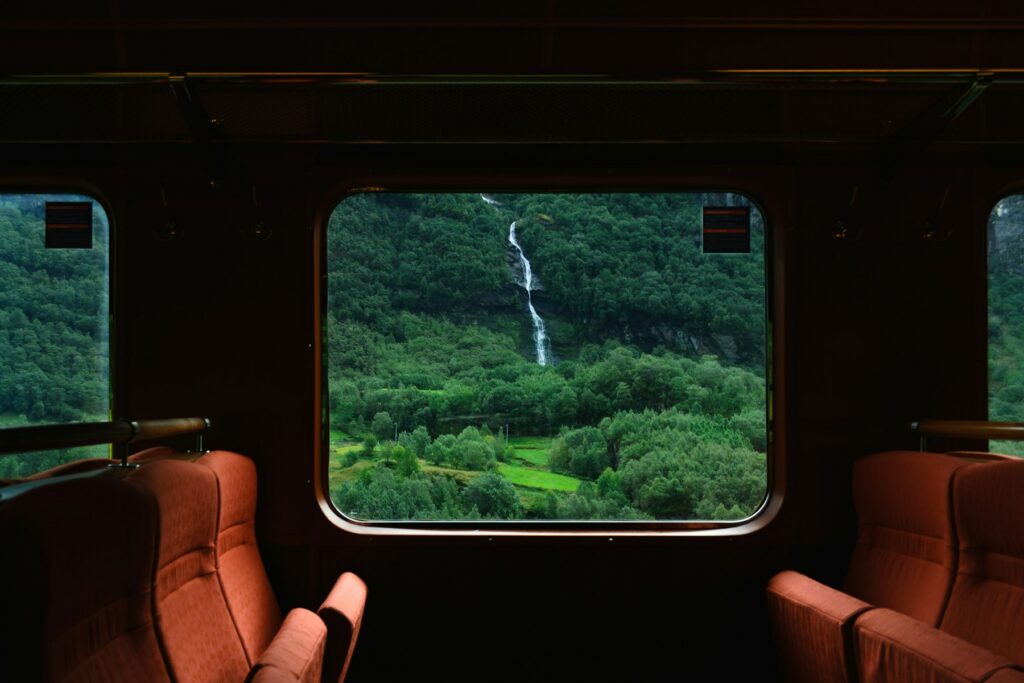
The carriage was old and the windows were smudged, but there was room to stretch out and nobody needed the luggage rack. An elderly couple from Novi Sad shared their bread, cheese, and a jar of homemade plum jam with me. I shared my one remaining paperback with their granddaughter, who was learning English. Neither of us had much stuff. We didn’t need it.
Day 26: the phone finally rings
On day 26, sitting at a café in Belgrade, my phone buzzed with a Greek number. It was Dimitra. My suitcase had been found. It had spent three weeks, apparently, in Lisbon.
She offered to send it to my hotel. I asked her to send it home instead.
When I finally unzipped it, back in my apartment, it felt like opening a time capsule from a person I used to be. Four pairs of shoes. A hair dryer. Seven outfits. The travel iron. I had spent a month on the road without any of it, and I couldn’t name a single moment I’d missed it.
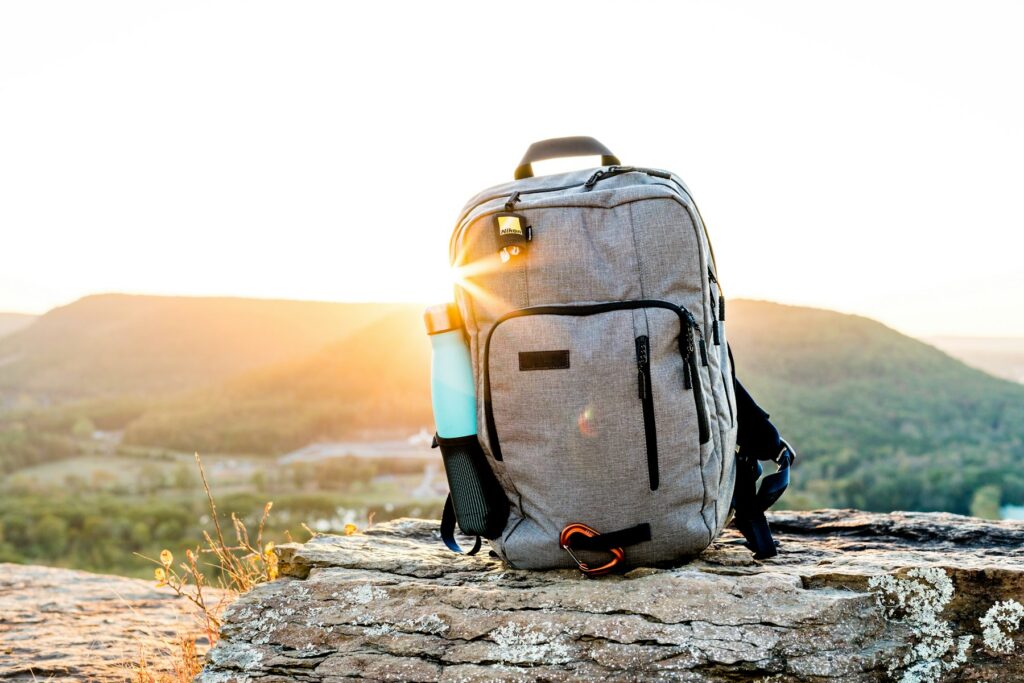
I haven’t checked a bag since.
The mindset shift
Before we get to the list, let’s talk about the mental shift required. You don’t need an outfit for every day. You don’t need backup electronics. You don’t need “just in case” items. Every “just in case” item is a small vote of no confidence in your ability to figure things out on the road. And you can figure things out on the road. Shops exist everywhere. People are kind. Sinks work.
The essential packing list
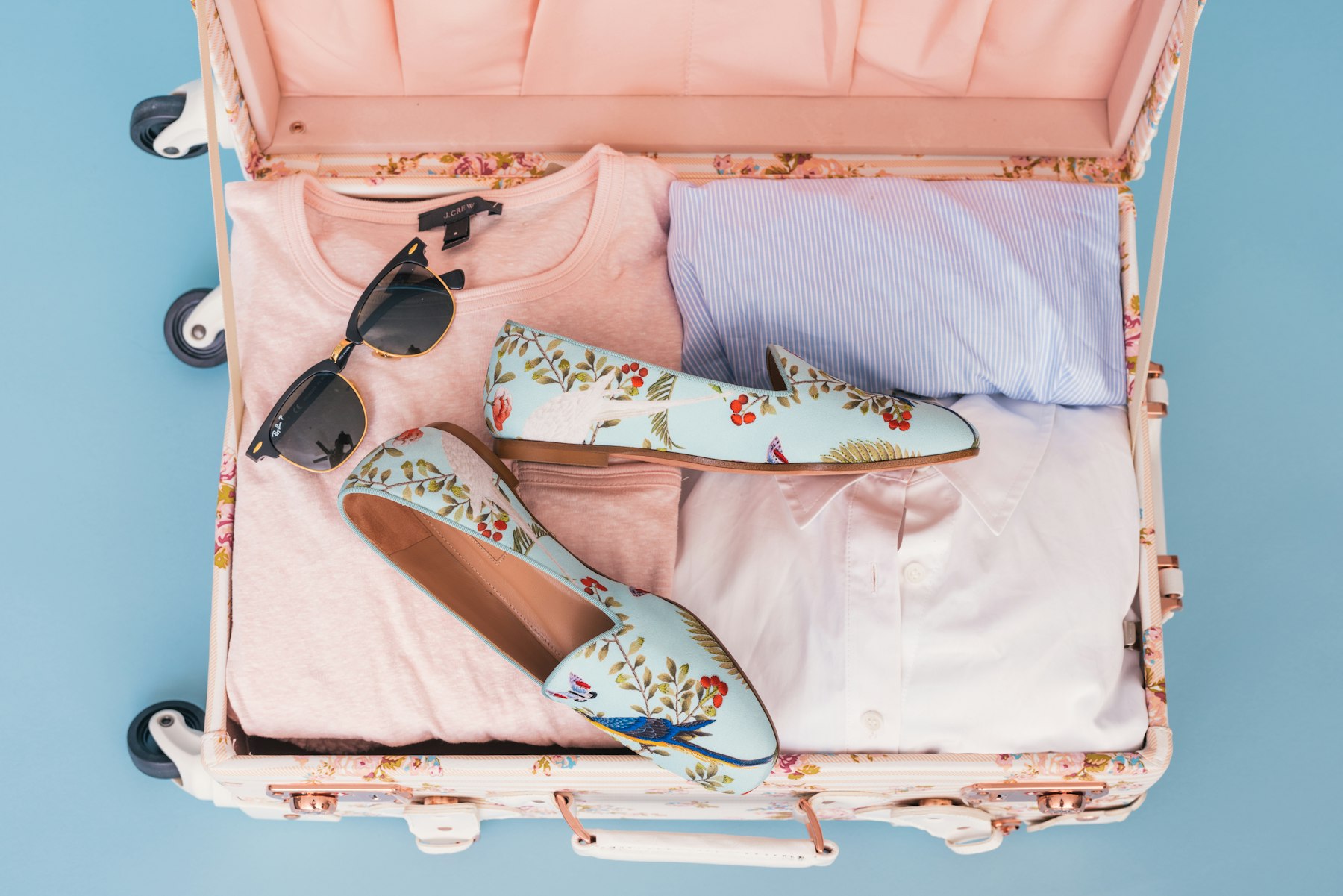
This is exactly what goes into my 35-liter carry-on backpack now, whether the trip is one week or six.
- Clothing: 5 shirts, 2 pants, 7 underwear, 3 socks
- Layers: 1 light jacket, 1 hoodie or wool sweater
- Shoes: 1 walking shoes (worn), 1 sandals
- Toiletries: Travel-size only, buy more locally
- Tech: Phone, charger, small power bank, universal adapter
- Laundry kit: A small bar of laundry soap and a travel clothesline
That’s it. Everything else is optional.
How to make it work
- Choose one color palette. If every top goes with every bottom, five shirts become ten outfits.
- Pick quick-dry fabrics. Merino wool and synthetic blends dry overnight in a hotel room.
- Wear your bulkiest items on travel days. Your jacket and walking shoes don’t need to fit in the bag.
- Do laundry once a week. Sink, soap, rinse, hang. Ten minutes.
- Use packing cubes. They compress clothes and make it easy to find things without unpacking everything.
What I always leave at home now
- Hair dryers (almost every hotel has one)
- “Going out” shoes
- More than one book (e-readers or swap shelves at hostels solve this)
- Anything I’ve never used on a previous trip
The real reward
Packing light isn’t about suffering. It’s about freedom. It’s walking out of the airport while everyone else waits at the carousel. It’s choosing the steep, beautiful path because you’re not dragging wheels behind you. It’s having room for the things you’ll pick up along the way: a bag of pepper, a borrowed sweater, a jar of plum jam.
The lightest bag carries the most stories. So does the right travel buddy, as Sarah found when she met hers on Wander.
Traveling light is easier with someone who already knows the terrain. Match on Wander before your next month-long trip.