Svaneti Georgia is the kind of place people describe with adjectives that sound like exaggeration until you stand under a ninth-century stone tower and watch cloud peel off a Caucasus ridge. I got there the hard way: by missing the one van I had carefully planned around.
This is the story of that missed marshrutka, the strangers who fed me because of it, and the mountain villages that made me cancel my next bookings. The practical part comes after.
The van that left without me
I had one plan for my last morning in Tbilisi: catch the early marshrutka from Didube station toward Zugdidi, then connect up the Enguri gorge to Mestia. I had checked the timetable. I had set two alarms. What I had not done was account for Tbilisi traffic, or for the fact that “early” on a Georgian minibus means the driver leaves when the seats look full.
I arrived twenty minutes late. The van was gone. The next one, a woman at the kiosk said, was not for hours. I sat on a concrete ledge eating a cold khachapuri meant for the road and tried not to invent a new personality who would just fly home.
A man about my age sat down with a duffel and a bag of bread. His name was Luka. He had missed a different van because his phone battery died overnight. We laughed the same defeated laugh. Then he asked whether I was trying to reach Svaneti.
“Mestia,” I said. “Eventually.”
He made two calls on a borrowed phone and handed me a scrap of paper with a name and a number. “My cousin Nino runs a guesthouse near the sulfur baths,” he said. “Leave your bag. Walk today. Go tomorrow when you are not angry at a timetable.” He pressed half his bread into my hand and disappeared into another van that filled and left in under four minutes.
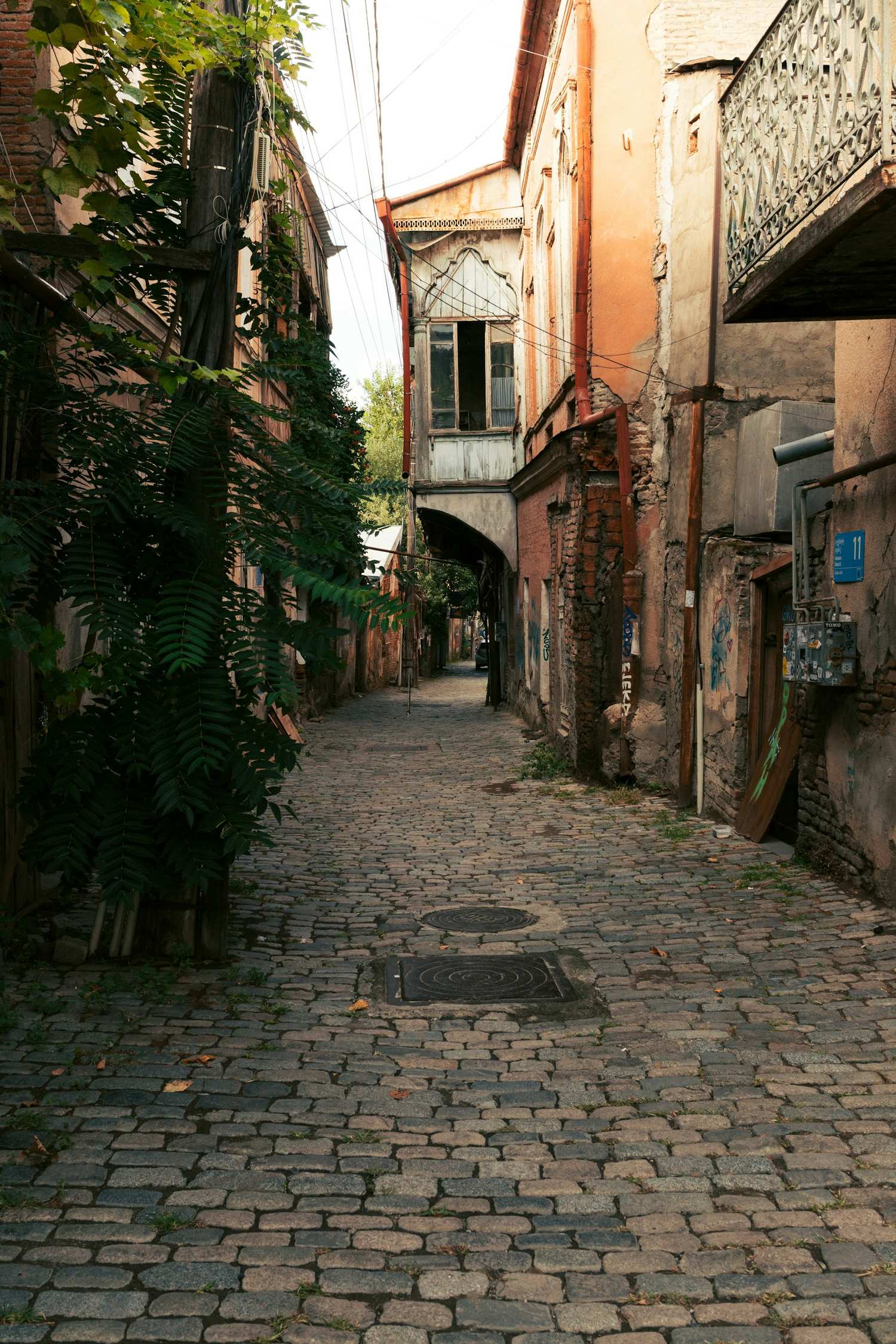
A night I did not plan in Tbilisi
Nino met me in a courtyard off a sloping cobbled street, wiped her hands on an apron, and decided I looked like someone who needed soup before conversation. Her guesthouse was three rooms above a kitchen that smelled of coriander and wood smoke. She did not ask why I had failed at public transport. She asked whether I liked spicy food.
That evening her neighbor Irakli appeared with a pot of lobio, the slow-cooked bean stew, and a jug of homemade wine with no label. We sat on mismatched chairs while Nino translated football arguments and quieter stories about relatives in the mountains. Irakli had grown up near Mestia. When I said I still hoped to go, he nodded as if I had finally said the right thing.
“Go in September if you can,” he said through Nino. “July is beautiful and crowded. September is beautiful and yours.”
In Georgia, a missed connection is often just the invitation you did not know how to ask for.
I stayed two nights instead of none. I rode the cable car toward Narikala at dusk, wandered alleys where wooden balconies leaned over the street like eavesdropping neighbors, and ate more bread than seemed polite. Packing light for a month-long trip had never felt wiser: my whole life still fit in one bag when Nino waved me onto the morning marshrutka herself.
The road into Svaneti Georgia
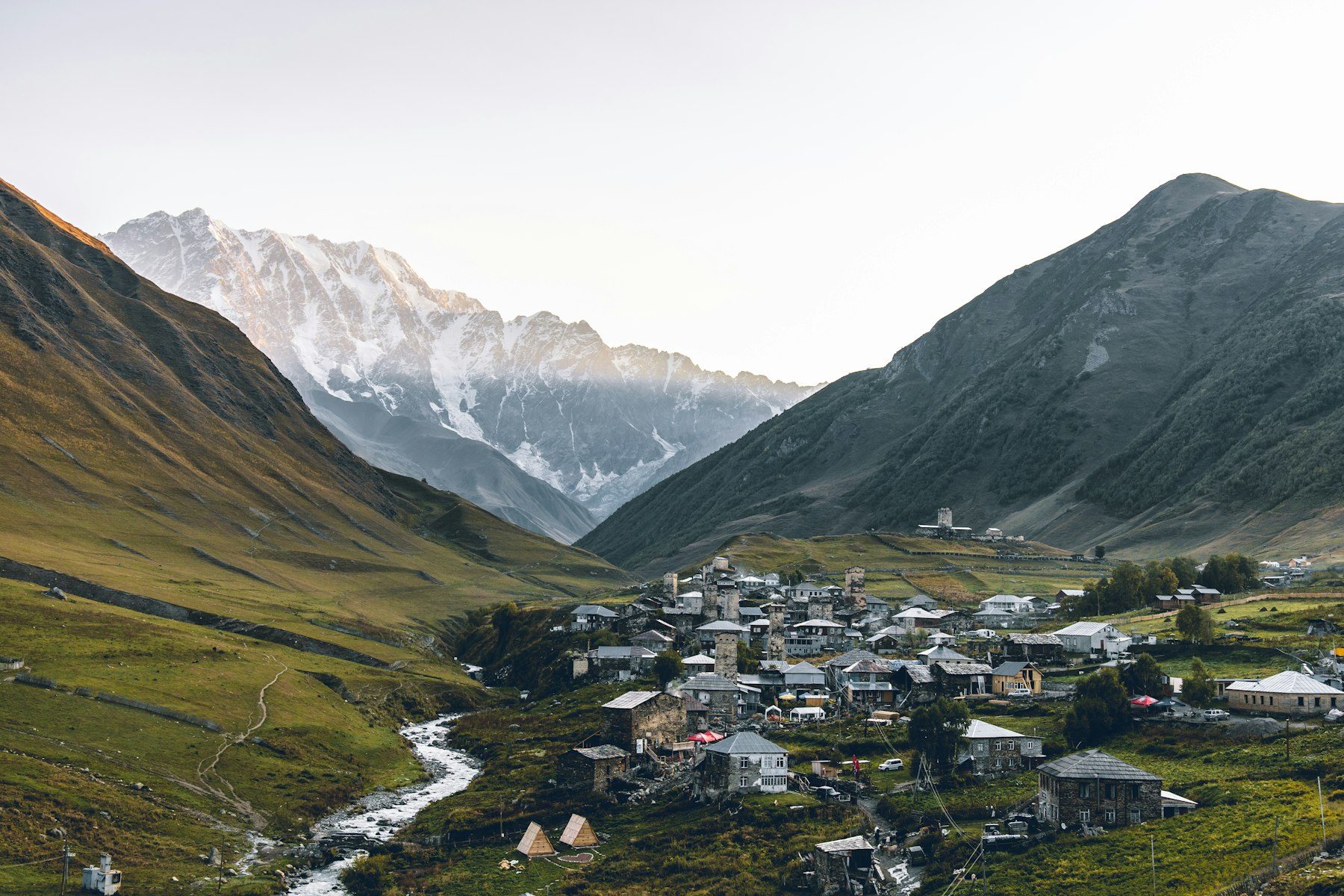
From Zugdidi the road climbs along the Enguri reservoir, through tunnels that make you remember headlights, and into a valley where stone towers start appearing like punctuation on the hillsides. Upper Svaneti has been on the UNESCO list since 1996 for those towers and the villages that still keep them. They were built between the ninth and twelfth centuries as family fortresses in a place where feuds and winters both ran long.
Mestia sits around 1,500 meters: towers, guesthouses, and the last reliable ATMs before the higher villages. My host, Maka, ran a house with her husband Giorgi on a lane that looked toward Mount Ushba when the clouds allowed. She put a plate of kubdari, the Svan meat pie fragrant with Svan salt, in front of me before I finished saying hello.
That night Giorgi poured chacha into tiny glasses and taught me to toast without draining everything at once. Their daughter Salome practiced English by asking about cities I barely remembered while rain rattled the metal roof. I had come for mountains. I stayed for the table.
Ushguli, Shkhara, and the long afternoon
The next day Giorgi arranged a shared 4×4 toward Ushguli, hamlets around 2,100 meters among the highest permanently inhabited places in Europe. The road is rough enough that ordinary cars struggle; the views are why people put up with it. Stone towers rise from meadows. Above them, Lamaria church sits against the white wall of Shkhara.
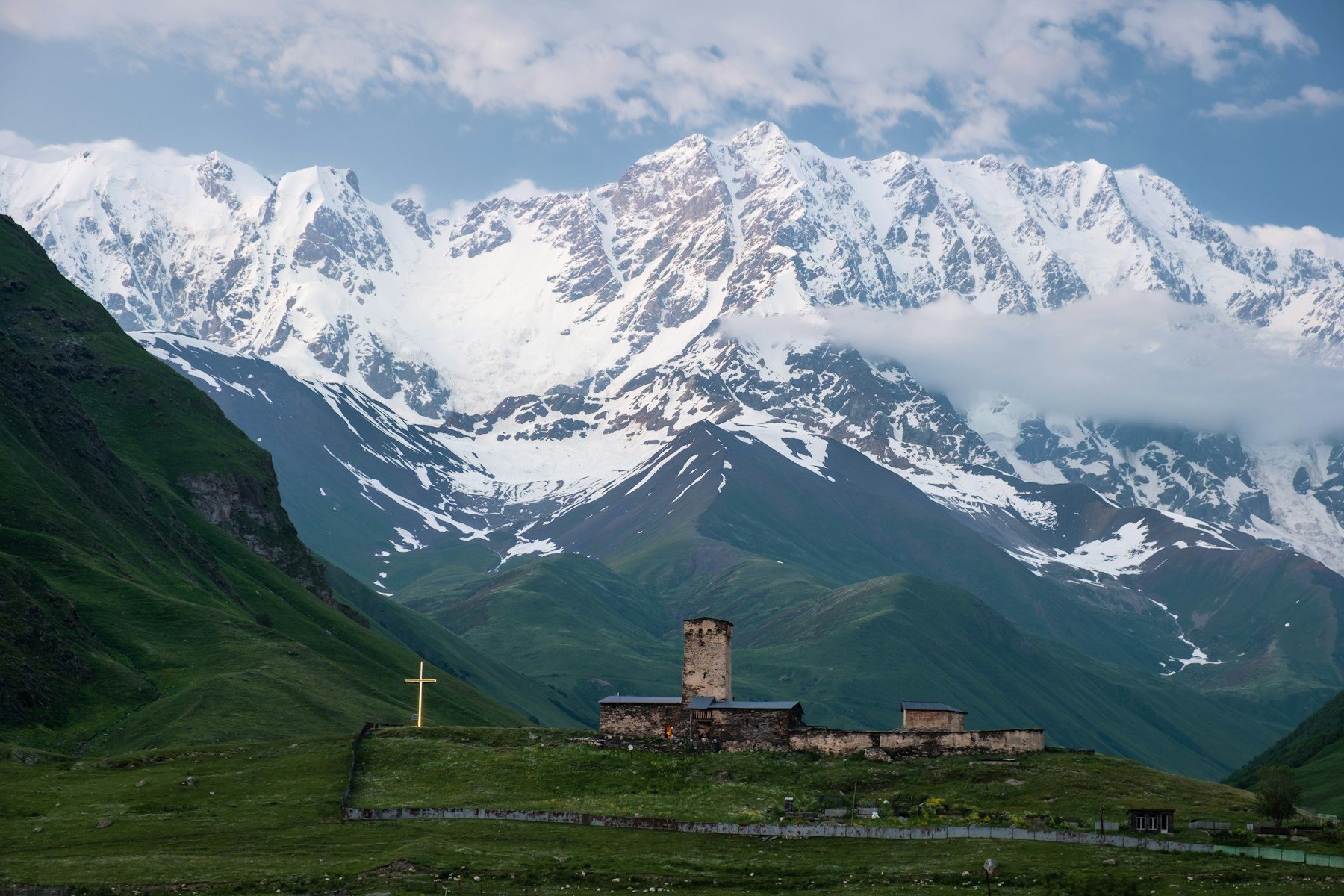
An older woman named Eka sold wool socks near the path. She pointed at the peak, then at my thin jacket, and shook her head with theatrical pity. She pressed thick socks into my hands and refused money until I bought three. “For your mother,” she said, somehow making the mime mean the same thing in every language.
On the way back, the valley floor was pink with late-summer wildflowers. I thought about Portugal’s Alentejo, how a dead car battery once stranded me into the best week of a trip, and how mountains and cork country share a rule: the plan that fails is often the one that works.
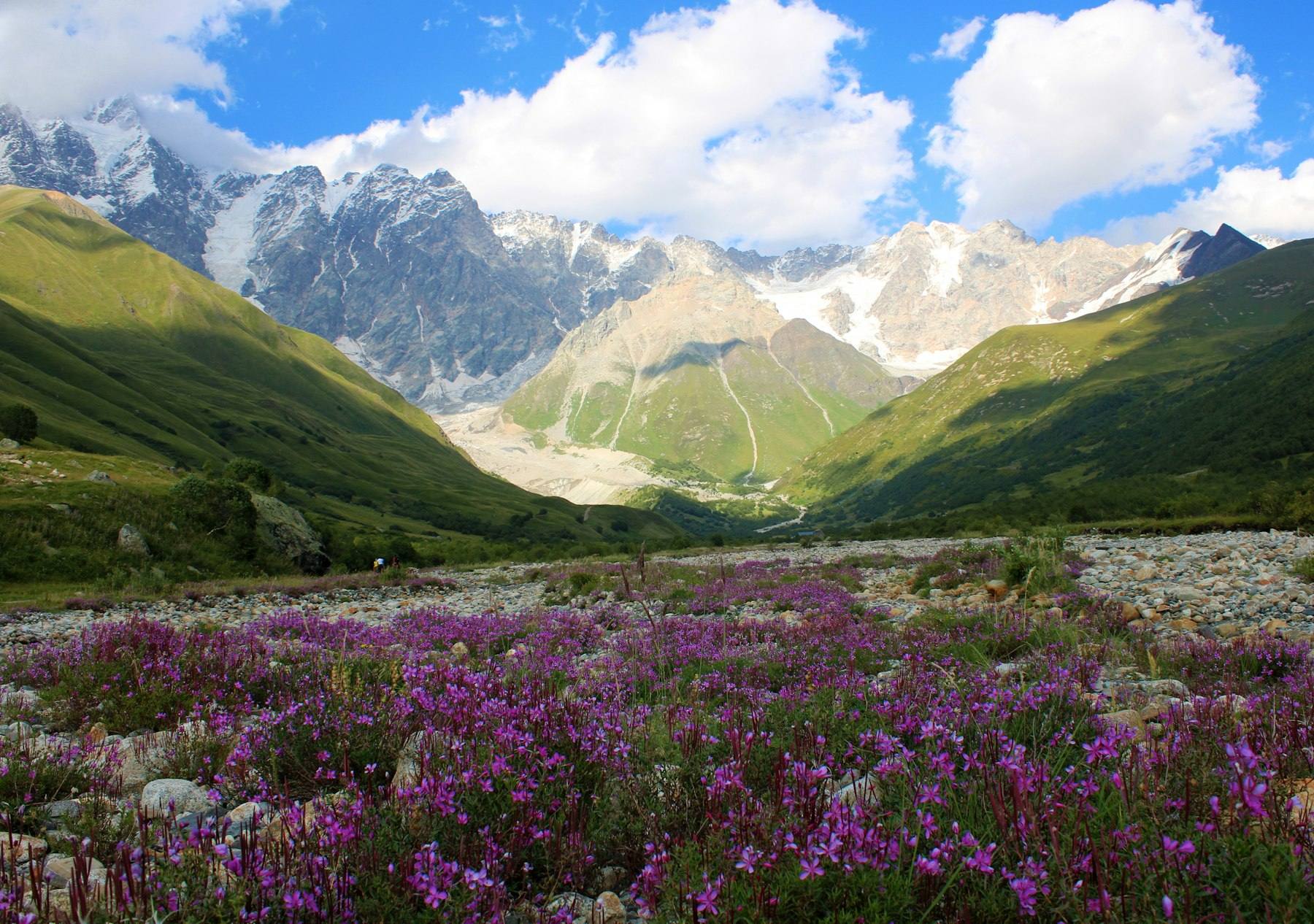
That evening Maka’s sister arrived with more cheese than the table could hold: chvishtari, herbs, and toasts that lasted until the rain stopped. If you are nervous about traveling alone, this is what I wish someone had told me before my first solo trip: loneliness is real for an afternoon. Georgian hospitality is longer.
Where to go in Svaneti
Give the region at least four days. Two nights in Mestia and one in Ushguli is a solid minimum; a week lets the weather rearrange your plans for the better.
Mestia
Base here for towers, the Svaneti Museum of History and Ethnography, and day walks. When it runs in summer, the Hatsvali cable car climbs to a ridge above town. Classic days: Koruldi Lakes (steep; share a jeep up) and the shorter forest walk toward Chalaadi glacier.
Ushguli
Four hamlets under Shkhara. Stay overnight so you see the light after day-trip vans leave. Walk to Lamaria, wander Chazhashi’s tower cluster, and bring cash: ATMs stop in Mestia.
Becho and Mazeri
West of Mestia under Ushba. Quieter guesthouses and big mountain views if July and August feel busy in town.
Practical tips
- Getting there: Marshrutkas run Tbilisi-Zugdidi-Mestia; from Kutaisi the climb is shorter. Shared cars cost more and save hours. Small planes to Mestia fly when weather allows – treat the schedule as hopeful.
- When to go: June to October for hiking. Mid to late September is the sweet spot: passes open, trails quieter, light golden. Winter is for skiing at Hatsvali and Tetnuldi.
- Money and packing: Carry cash for guesthouses and drivers. Layers matter even in summer; weather at 2,500 meters invents seasons by the hour.
- Eat this: Kubdari, chvishtari, local cheese, anything with Svan salt. Accept the supra invitations. Sweets make good host gifts.
- Respect: Ask before photographing people or private towers. Many towers are still family-owned. Learn “gamarjoba” (hello) and “madloba” (thank you).
What I took home
I still have Eka’s socks and half a bag of Svan salt Maka pressed into my hands at dawn. I still think about Luka’s scrap of paper every time a timetable abandons me.
Svaneti did not teach me to be a better planner. It taught me that the Caucasus runs on a different clock, and that kindness fills the gaps where schedules fail. Leave one day unplanned. The towers will still be there when you arrive, and so, somehow, will a chair at someone’s table.
Heading for the towers with company? Match dates and pace with a travel buddy on Wander before you book the marshrutka.