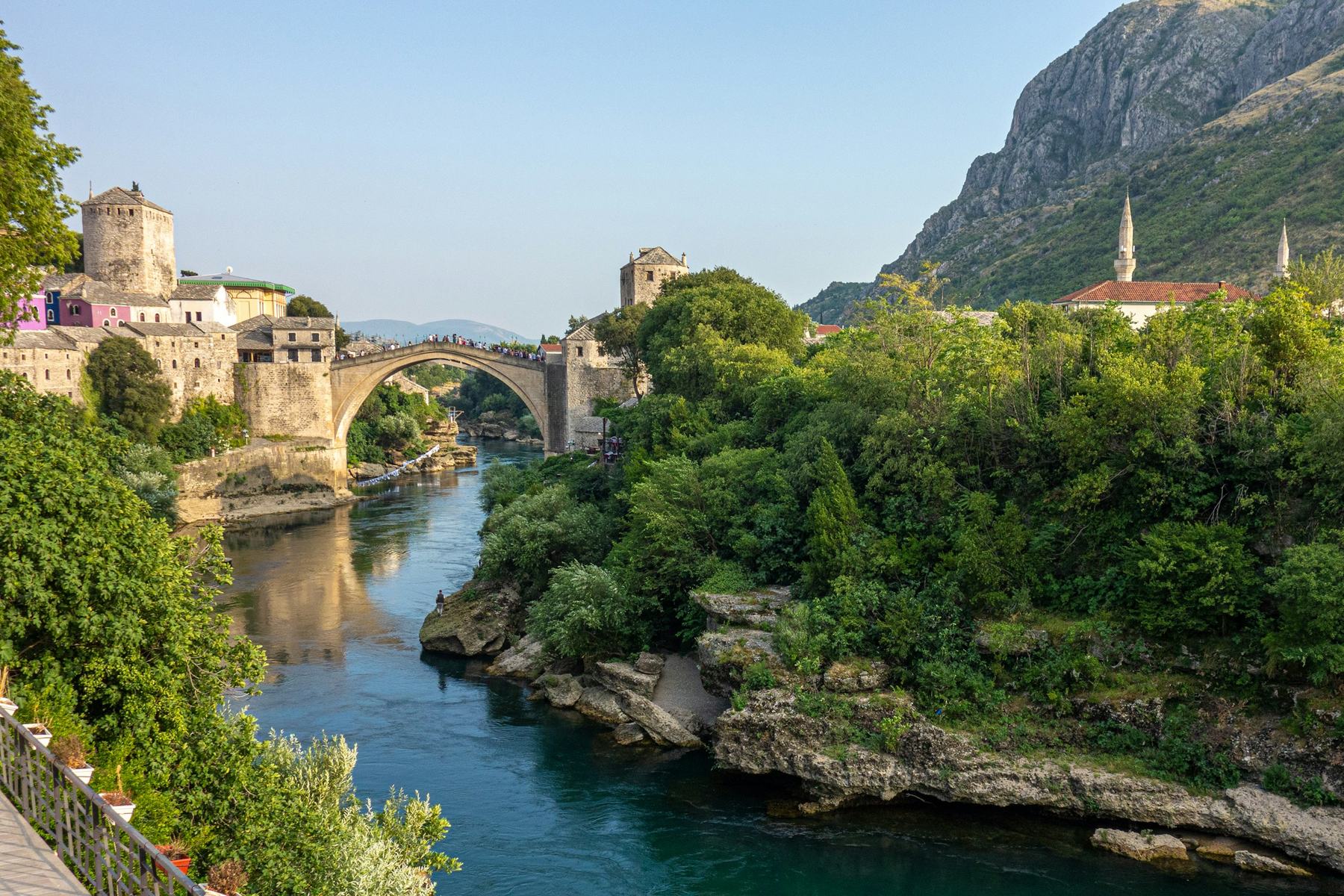
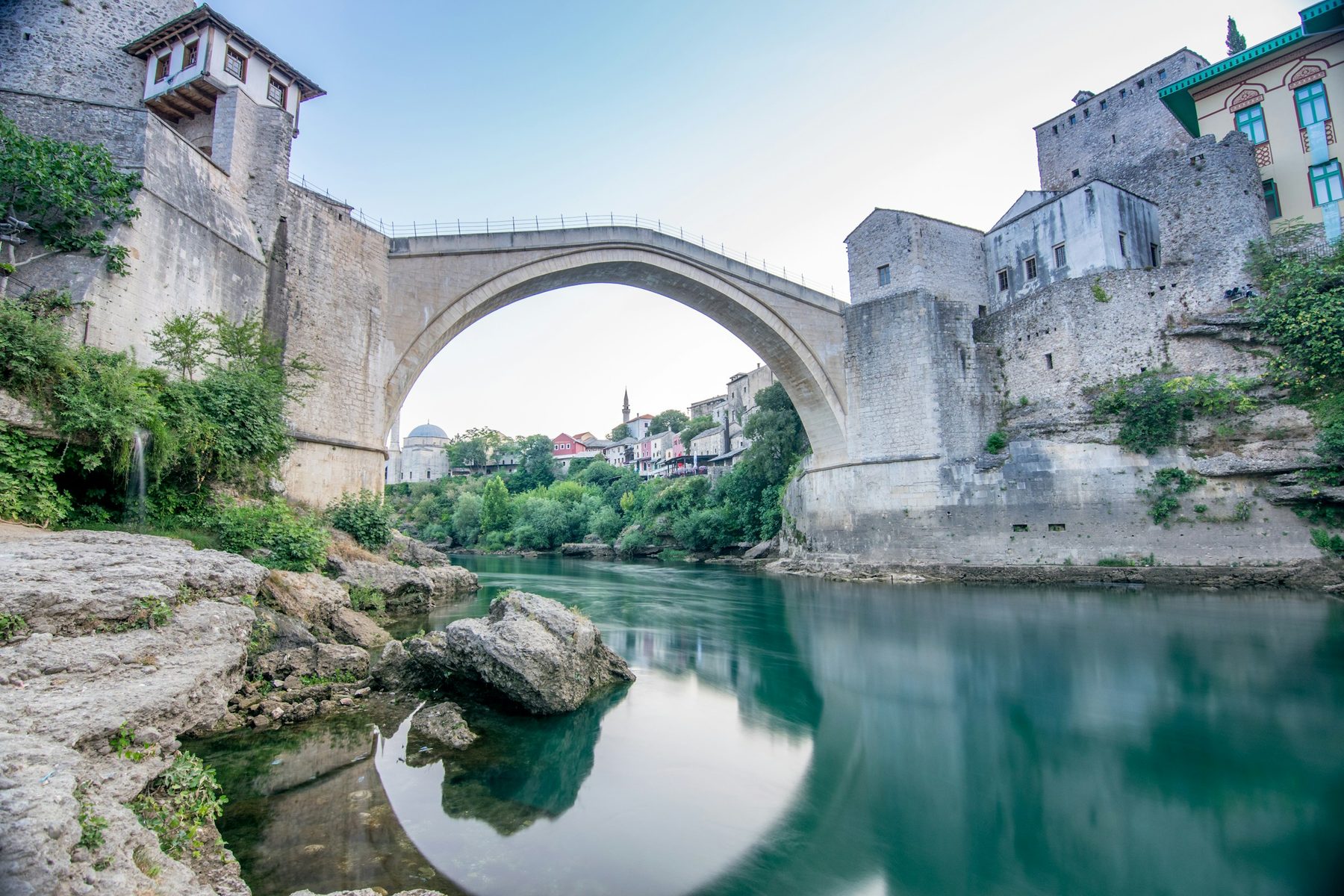
Mostar Bosnia is a town built around a single stone arch. The Old Bridge, Stari Most, leaps the green Neretva River in one pale curve, and the whole old town seems to lean toward it. I met it for the first time at night, holding half a key and a phone at four percent battery.
This is the story of that key, the neighbor who heard me fighting it, and the days that followed. The practical part comes after.
Half a key at eleven at night
My bus from Sarajevo was late, and by the time I climbed the lane to my guesthouse the old town had gone quiet. The owner, Mirsad, was away at a family wedding; the key would be under the geraniums by the gate. It was.
The lock was old iron, the key was older, and the two had clearly been arguing for years. I turned. Nothing. I jiggled, as Mirsad’s note advised. Then I jiggled harder, and the key snapped clean in half, leaving its business end inside the door.
I called Mirsad. Straight to voicemail, which made sense for a man at a wedding. My phone slid toward three percent.
A shutter opened above me. A woman in a cardigan and slippers leaned out, looked at the half key in my hand, and said something that sounded like a verdict. A minute later she was at her own gate with a flashlight. Her name was Emina, and she had lived next door to that lock for forty years.
“That door,” she said, in careful English. “Always that door.” She tried a hairpin, then shook her head. “Tomorrow, Haris. Tonight, you sleep here.” I tried to protest. She was already carrying my suitcase.
Coffee in Emina’s courtyard
Emina’s spare room smelled of lavender and ironing. In the morning she sat me in a courtyard shaded by a fig tree and made Bosnian coffee the slow way: grounds and water in a small copper pot called a džezva, brought up gently on the stove, then poured into little cups called fildžan, with a cube of sugar and a piece of rahat lokum on the side.
“Not espresso,” she warned, when I reached for it too fast. “You sit. You talk. Then you drink.”
Her grandson Tarik wandered out halfway through, home from university in Sarajevo for the summer, and translated the parts of Emina’s opinions that needed translating. By the second cup, Mirsad had called back, mortified, and Emina had told him, at length, that his lock was a disgrace.
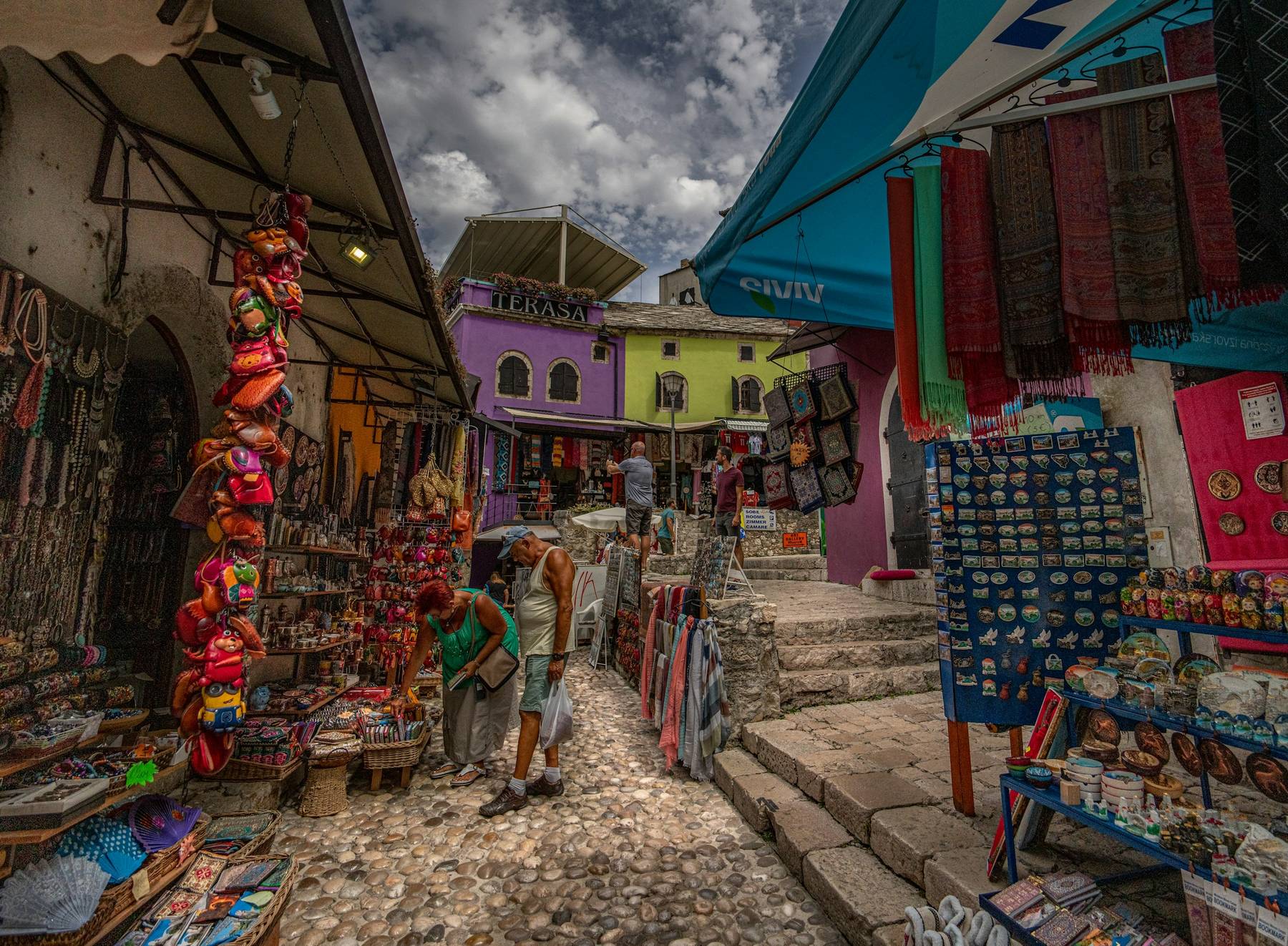
After coffee, Tarik walked me down to Kujundžiluk, the old bazaar street that runs from the bridge on the east bank. The name comes from the coppersmiths who once filled it, and a few still work there between the scarf stalls and souvenir shops.
The coppersmith who cut a key
Haris had a workshop the size of a closet, hung with hammered trays and coffee pots and the steady tapping of a man who has done this for decades. He looked at the half key, then at me, and laughed. “Mirsad’s door,” he said. Apparently the whole street knew it.
He came up the hill with a small bag of tools, fished the broken piece out in about a minute, and took the lock back to his shop. While he worked, Tarik and I climbed the minaret of the Koski Mehmed Pasha Mosque, a narrow spiral of steps that opens onto the best view of the Old Bridge in town.
Tarik told me the bridge’s story without drama. Ottoman builders finished it in the 16th century. It stood for more than four hundred years, until it was destroyed in 1993 during the war. It was rebuilt with traditional methods and reopened in 2004, and the area around it is now a UNESCO World Heritage site. “My grandmother remembers it before,” he said. “She says it looks right again.”
Below us, a diver in red trunks stood on the parapet, collecting money from the crowd before he would jump. Bridge diving here is a tradition, not a stunt, Tarik said. When the man finally dropped into the cold river, the whole bridge exhaled.
By afternoon, Haris had a new key cut and the old lock oiled into something close to cooperation. He charged only for the blank. So I bought a small copper džezva, which he wrapped in newspaper and tapped twice for luck.
Trout and cold water in Blagaj
The next morning, Tarik announced that I could not leave without seeing Blagaj, a village a short drive south of Mostar and that Emina had already packed us lunch.
Blagaj is where the Buna River comes out of the base of a sheer cliff, cold and impossibly blue. Beside the spring sits the Blagaj Tekke, a dervish house from the Ottoman era, white walls and wooden balconies tucked under the rock. I borrowed a scarf at the entrance, as women visitors are asked to, and sat inside by a window watching the water.
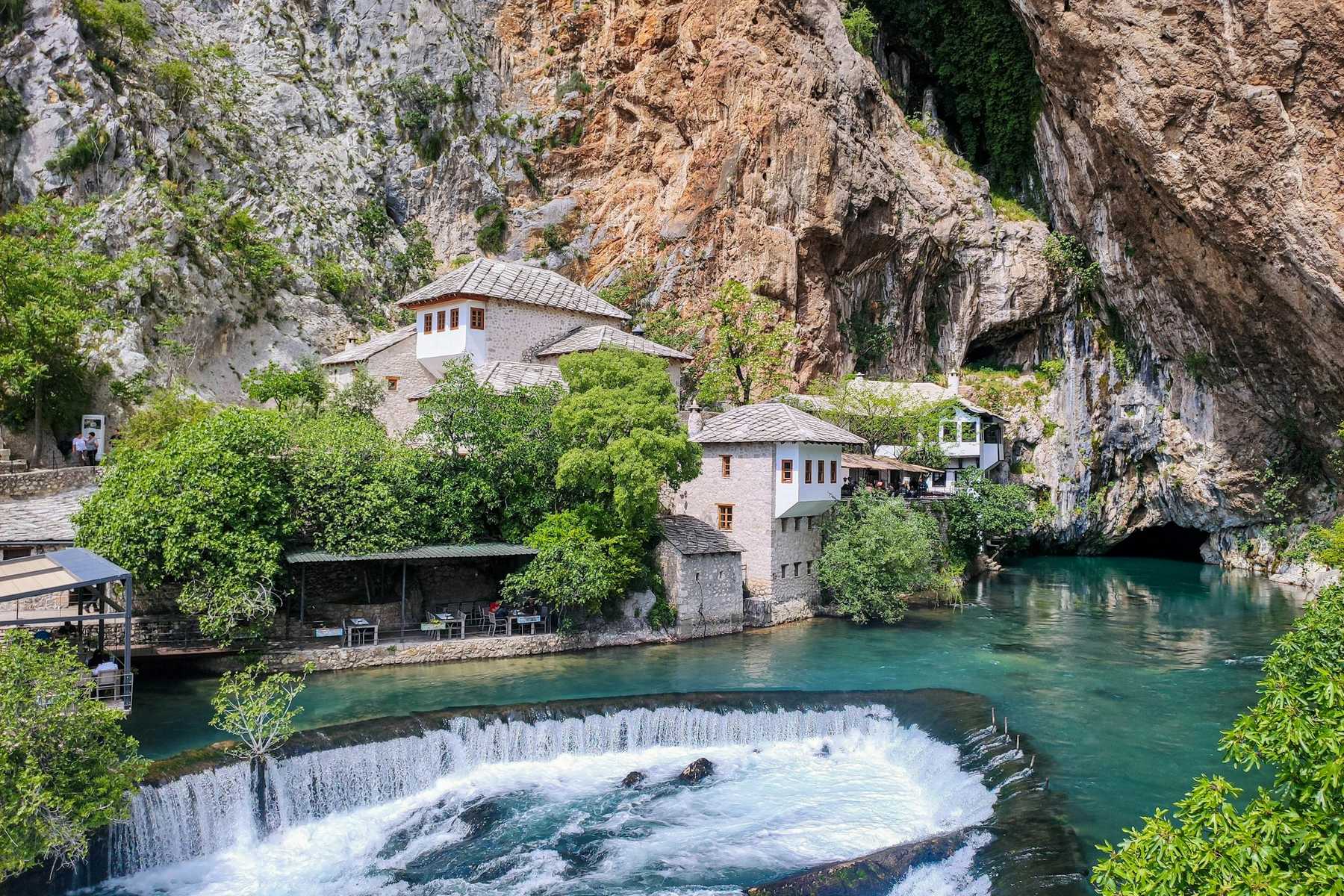
We ate grilled trout on a terrace by the river, then Emina’s potato pita to keep the peace at home. Tarik looked at my itinerary, crossed out two stops, and wrote in Počitelj, a hillside Ottoman village on the road south, and the Kravica waterfalls. He was right about both.
Planning a trip to Mostar Bosnia
Mostar is the main town of Herzegovina, the southern part of Bosnia and Herzegovina. Many visitors come on a day trip from the coast; stay two nights to see the bridge after the crowds leave.
Getting there
Trains run between Sarajevo and Mostar along the Neretva valley, one of the prettiest rides in the region. Buses connect Mostar with Sarajevo, Dubrovnik, and Split. Check schedules locally, since they change by season.
When to go
Summer in Mostar is seriously hot, and the old town is busiest at midday. Spring and early fall are gentler. In any season, see the bridge early in the morning or in the evening.
Money and costs
The currency is the convertible mark, written KM or BAM. Carry cash for small cafes, bazaar stalls, and drivers. For budgeting, this realistic breakdown of Europe on $50 a day helps.
Packing and practical tips
- Shoes with grip: The old town’s cobblestones, and the bridge itself, are polished smooth and slippery.
- A light scarf: Handy for mosques and the Blagaj Tekke. My notes on packing light for a month-long trip cover the rest.
- Charge your phone: Arrive with a full battery and your host’s number written down, especially if you’re traveling solo. Here’s what I wish I knew before my first solo trip.
What a broken key opened
On my last morning I walked onto the Old Bridge at six, when it belonged to a few fishermen and a cat. The river was so green it looked lit from below. A town that had lost this bridge and built it back had no reason to be patient with a careless stranger. It was anyway.
Emina sent me off with coffee, a hug, and instructions to tell Mirsad again about his door. I still use Haris’s copper pot most mornings. I sit, I talk, then I drink.
Frequently asked questions
How many days do you need in Mostar?
One full day covers the Old Bridge and Kujundžiluk. Two or three nights lets you avoid the day-trip crowds and add Blagaj, Počitelj, or the Kravica waterfalls.
How do you get from Sarajevo to Mostar?
Trains and buses both connect the two cities. The train follows the Neretva valley and is the more scenic option. Confirm times locally, because schedules change by season.
Is Blagaj worth a visit from Mostar?
Yes. A short drive south of Mostar, the Buna River emerges from a cliff beside the Blagaj Tekke, a historic dervish house. Dress modestly to go inside.
Want someone to share the bridge at dawn? Find a travel buddy who matches your dates and pace on Wander.
Keep reading
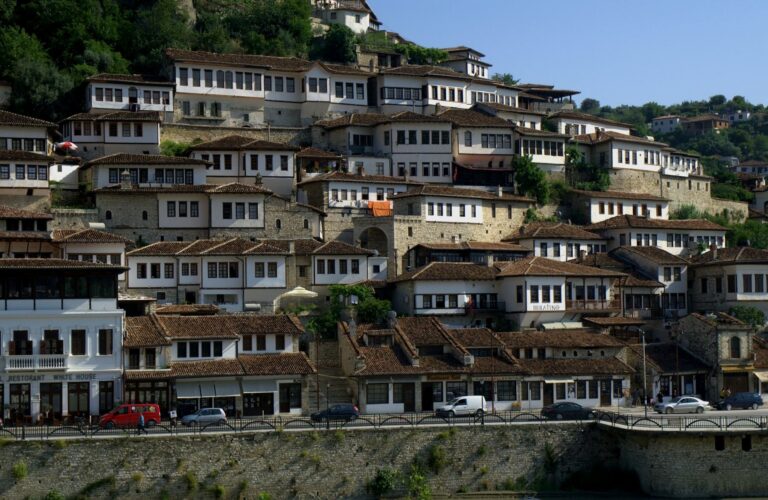
- Berat Albania: a wrong-month booking and a thousand windows: another Ottoman-era Balkan town where a mistake led to a family table
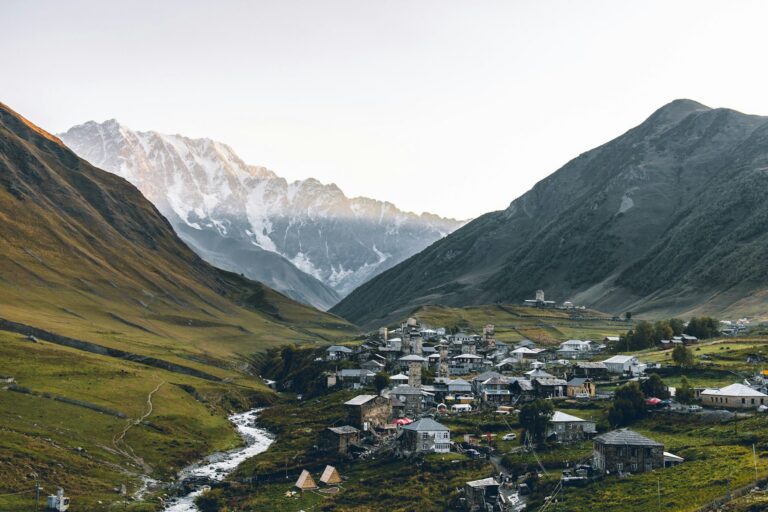
- Svaneti Georgia: towers, a missed van, and a long table: stone towers, a broken plan, and strangers who became hosts
- How Sarah met her travel buddy on Wander: for the next trip, when you’d rather not stand at a locked door alone
Travel with Wander
Don’t go alone. Match with travelers who share your dates, pace, and places before you fly.