Everyone goes to Lisbon and Porto, and for a first solo trip those cities are a gentle start. But the real Portugal, the one with rolling golden plains, ancient olive groves, and villages where time moves slowly, that’s the Alentejo.
I spent two weeks exploring this region and fell completely in love. Though, to be honest, I didn’t fall in love with the Alentejo because of anything I planned. I fell in love because my rental car died.
The car that wouldn’t start
I’d spent a perfect afternoon in Monsaraz, a tiny walled village on a hilltop above the Alqueva lake. I’d walked its two main streets end to end, climbed the castle walls, and watched the light turn the water below from blue to silver. Then I walked back down to the parking area, turned the key, and heard the saddest click in the world.
The battery was dead. I’d left the headlights on. It was 6 p.m. on a Sunday, the nearest town was a long way off, and my phone had one bar of signal.
I was standing beside the car, trying to work out what “roadside assistance” was in Portuguese, when an old pickup truck rattled to a stop beside me. The driver was a man of about seventy with a white mustache, a sun-creased face, and forearms like tree branches. He leaned out the window and asked me something in rapid Portuguese. I pointed at the car and made a sad noise.
He laughed, got out, and produced a set of jumper cables from the back of his truck. The car still wouldn’t start. He shook his head, looked at the sky, looked at me, and said, very slowly, the only English sentence I ever heard him say: “Tomorrow. Now, dinner.”
His name was Joaquim.
Dinner with Joaquim and Graça
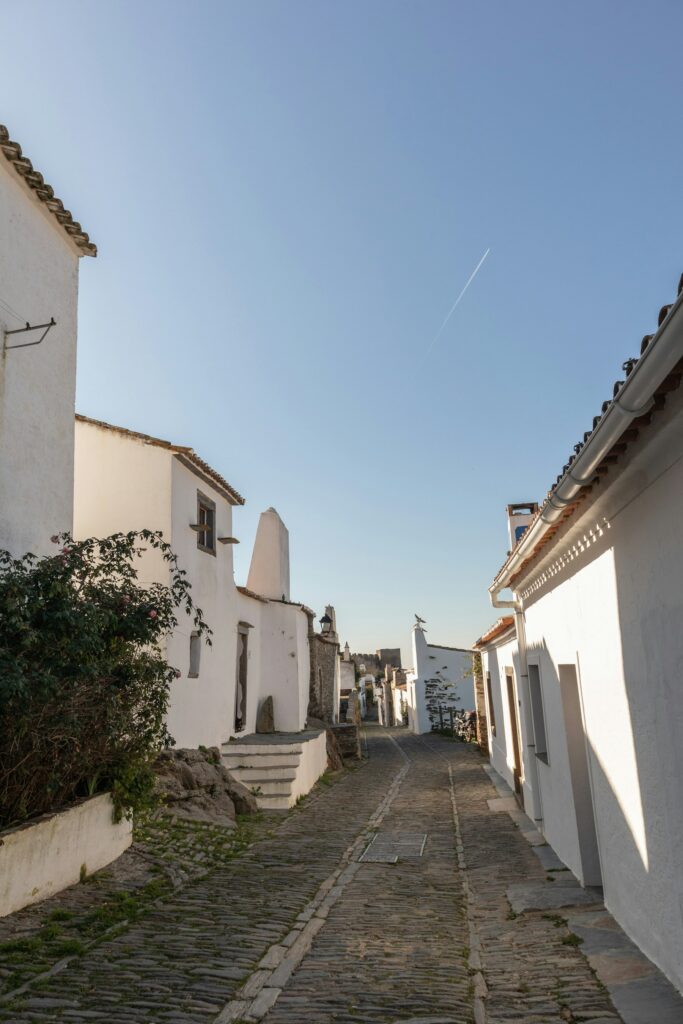
Joaquim and his wife Graça lived in a low white house with blue-painted trim at the edge of a village a few minutes down the hill. Their kitchen had a fireplace big enough to stand in, a long wooden table, and a radio playing old songs. Graça took one look at me, sighed in a way that suggested Joaquim brought home lost things often, and pulled out another chair.
Their granddaughter Rita, who was visiting from Lisbon for the weekend, became our translator. Dinner was açorda, a garlicky bread soup with coriander and a poached egg, followed by pork with clams, followed by cheese, followed by more cheese. The local red wine came out of a jug with no label. Joaquim had made it, Rita explained. Joaquim nodded proudly and refilled my glass before I’d even noticed it was empty.
In Alentejo, lunch takes two hours, dinner takes three, and nobody apologizes for it.
I learned that dinner lasted from eight until nearly midnight. I learned that Joaquim had spent his whole working life as a cork harvester, like his father and grandfather. I learned that Graça had never once been to Lisbon and saw no reason to start now. I learned that they’d been married for forty-nine years and still argued about whose turn it was to feed the cat.
They insisted I sleep in the spare room. In the morning, a mechanic friend of Joaquim’s arrived with a new battery. When I tried to pay for my stay, Graça looked genuinely offended.
The cork trees
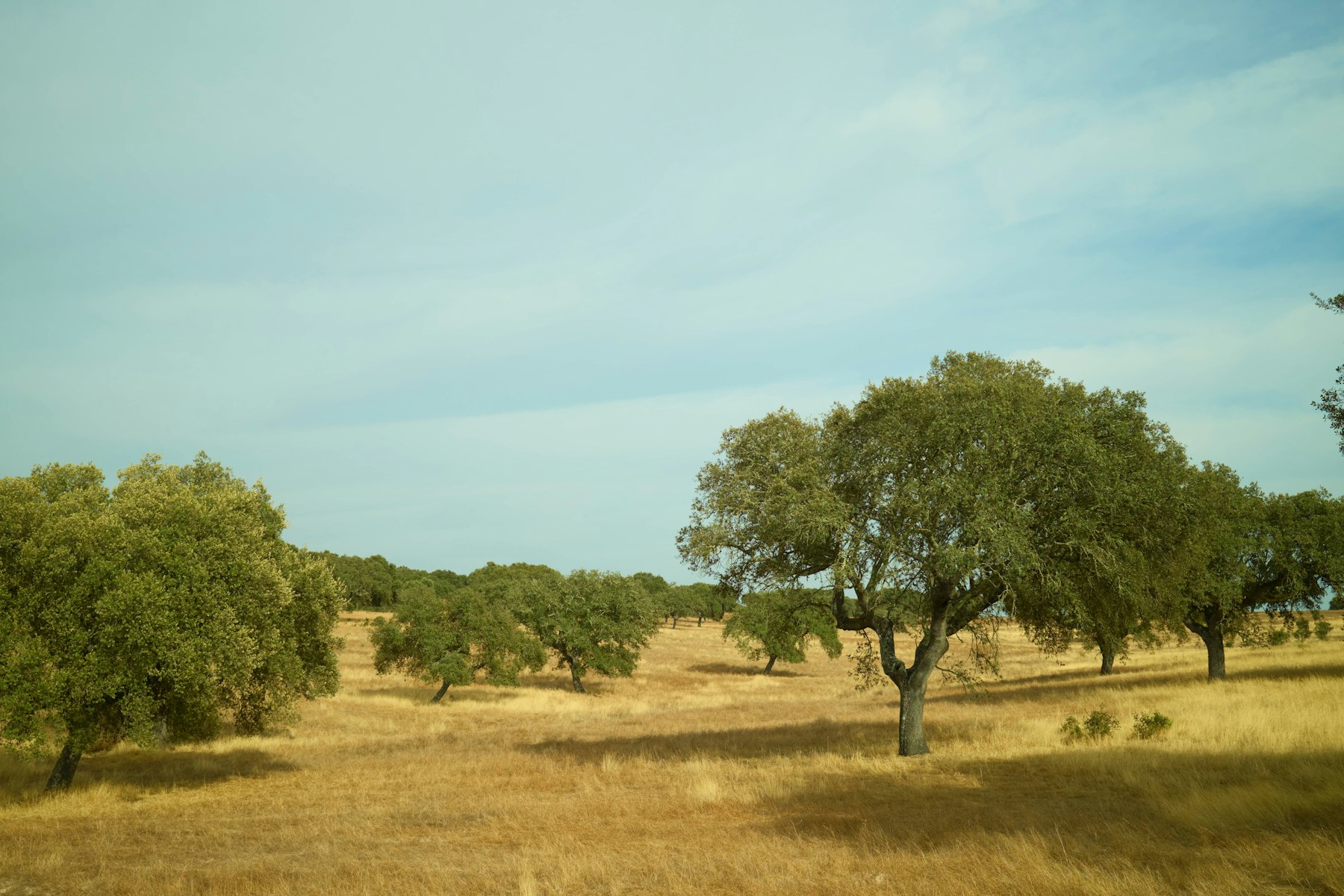
Before I left, Joaquim took me out to see the montado, the cork oak forests that cover so much of the region.
Cork comes from the bark of the cork oak. A tree has to be around 25 years old before its first harvest, and after that, the bark can be stripped only once every nine years. Done properly, the tree isn’t harmed. It just grows its bark back. Some cork oaks are harvested for well over a century.
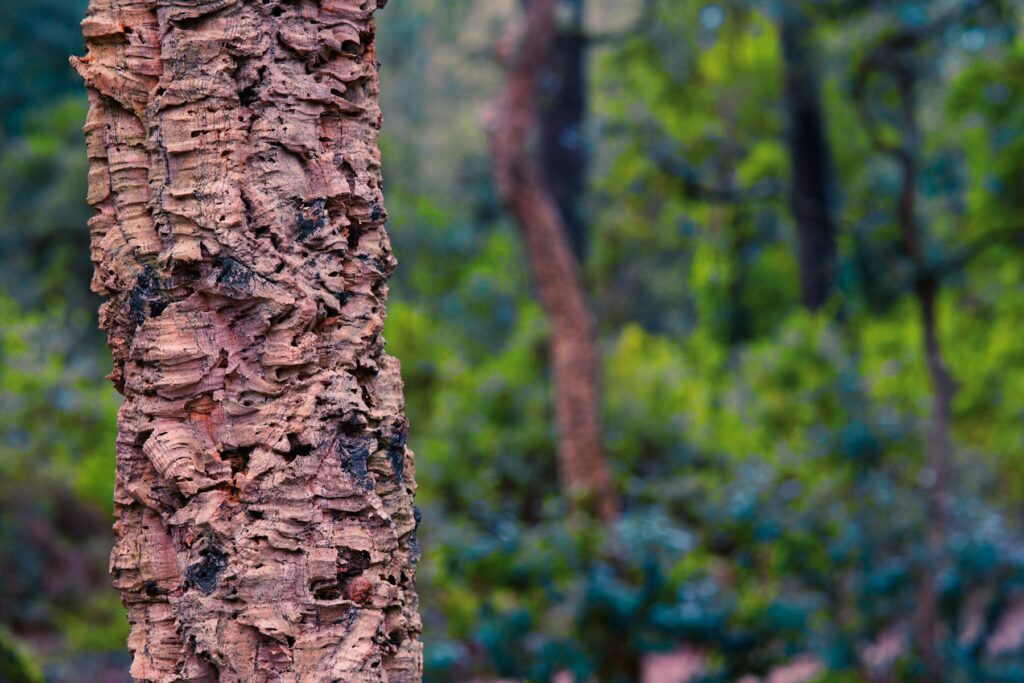
Joaquim walked me through the trees, pointing out the trunks harvested recently, still a deep reddish-brown where the bark had come off, and the white numbers painted on them. Each number, Rita explained, is the last digit of the year the tree was harvested, so harvesters know when it’ll be ready again.
He put my hand flat against a trunk that hadn’t been touched in eight years. The bark was thick, spongy, warm from the sun. “Next year,” he said, through Rita. He patted the tree like an old friend. Then he said something that made Rita laugh, and she translated: “He says this tree will still be here long after both of you. That’s the point.”
I had planned to drive to the coast that day. I stayed three more nights in the area instead, and had dinner at Graça’s table twice more.
What makes Alentejo special
The Alentejo produces most of Portugal’s cork and some of its best wines. It’s a landscape of whitewashed villages, endless wheat fields, and cork oak forests stretching to the horizon. It covers about a third of the country, yet is home to only a small fraction of its people. That’s the magic: space, silence, and the feeling of having somewhere beautiful almost to yourself—the same reason I chase hidden gems of Southeast Asia when the main trail feels crowded.
Where to go
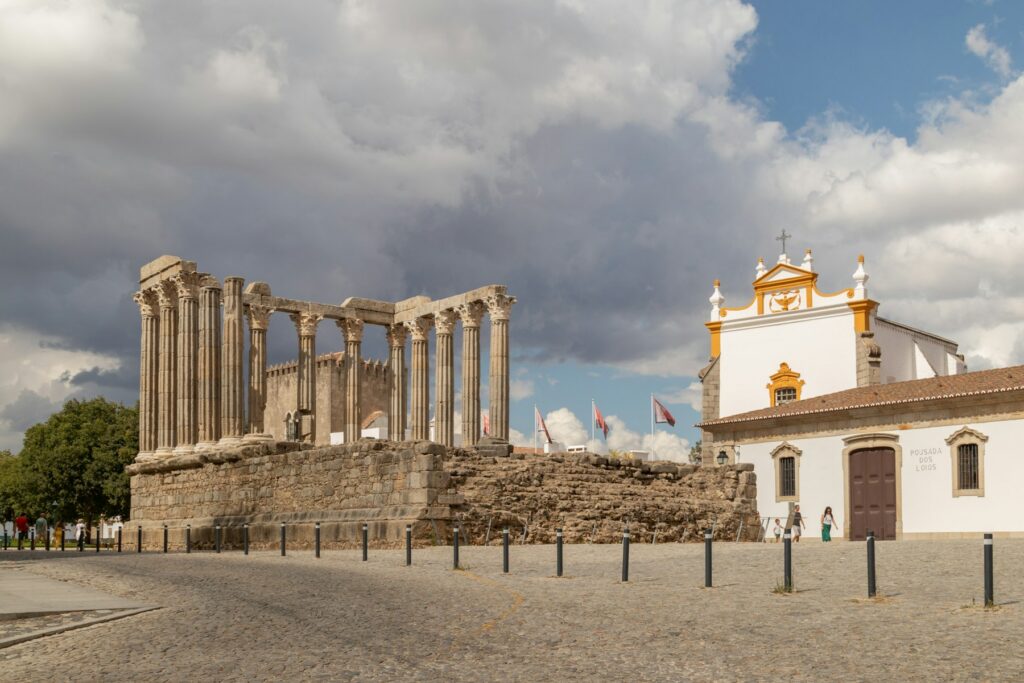
- Évora: UNESCO-listed medieval city, incredible Roman temple
- Monsaraz: Hilltop village with castle views
- Marvão: Eagle’s nest village on the Spanish border
- Comporta (on the Alentejo coast, often bundled into Alentejo trips): Untouched beaches, rice paddies, stork nests
Évora
The region’s capital and the best base for exploring. Wander the walls of the old town, stand in front of the Roman Temple at sunset, and visit the Chapel of Bones, a chapel lined with human bones that is as fascinating as it is unsettling. Eat at a family tasca where the menu changes daily.
Monsaraz and Alqueva
Stay overnight if you can, because the day-trippers leave and the village belongs to you. The Alqueva area is a certified dark sky reserve, so on a clear night the stars are extraordinary. Just remember to turn your headlights off.
Marvão
A village built along a granite ridge, with views across the plains into Spain. Arrive in the late afternoon and walk the castle walls as the light fades.
Comporta
On the Alentejo coast, where the region meets the Atlantic. Wide, empty beaches backed by dunes and pine forest, and storks nesting on top of old telegraph poles and chimneys.
Practical tips
- Rent a car. Public transport is limited between villages. Drive slowly and enjoy it. Fuel and a rental add up, so if this is part of a longer loop, the notebook method from Europe on $50 a day helps keep costs honest.
- Visit in spring or autumn. Summer temperatures can be fierce, especially inland.
- Book a winery visit. Many estates offer tastings and long lunches with their own olive oil and wine.
- Eat late, eat long. Lunch is from about 1 p.m., dinner rarely before 8.
- Learn a few words of Portuguese. “Obrigado” (or “obrigada” if you’re a woman) goes a long way.
The postcard
Every December, I send Joaquim and Graça a card. Every January, a reply arrives in Rita’s handwriting, with a few lines from each of them. Last year’s said the tree I’d touched had been harvested, and that its number was now painted on the trunk.
The next harvest is nine years away. I fully intend to be there for it.
Want company for a cork-country road trip? Match with someone heading to Évora or the coast on Wander.