Southeast Asia is one of the most traveled regions in the world. But beyond the well-worn paths of Bangkok, Bali, and Angkor Wat lie destinations that offer something rarer: genuine discovery. Places where you’ll still be greeted with surprise and warmth, where the landscapes feel untouched, and where your travel stories will be uniquely your own.
Before the list, let me tell you how I learned that the best places are often the ones you never planned to see.
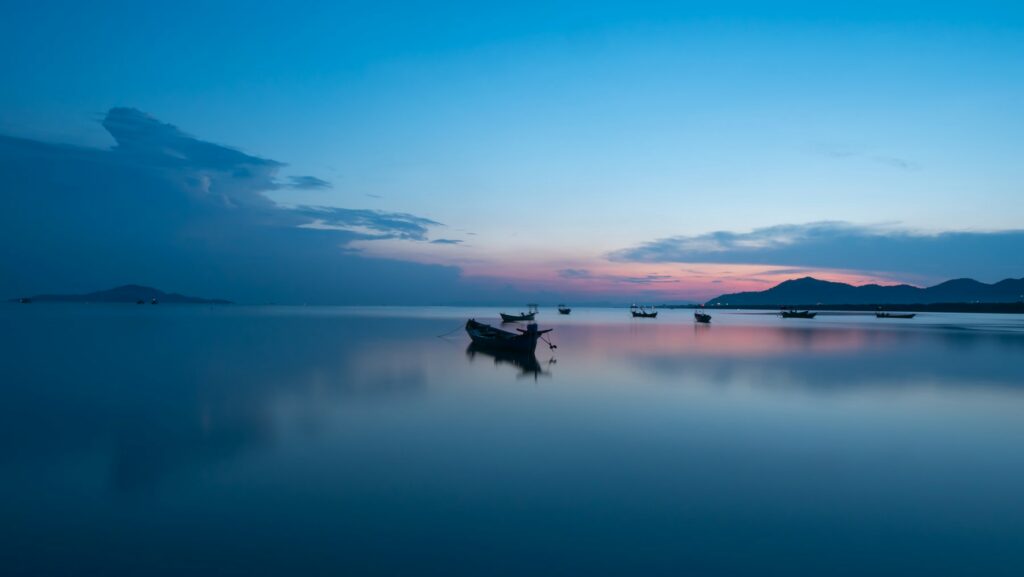
The bus I missed in Kampot
I had exactly one plan for my last morning in Kampot: catch the 8:00 a.m. minibus to Phnom Penh. I had my ticket. I had my backpack zipped the night before. What I did not have was a working alarm, because my phone had quietly died sometime after midnight while I was reading on the guesthouse balcony.
I woke up at 8:20 to the sound of a rooster and the sinking certainty that I’d blown it. By the time I ran down to the riverfront, the minibus office was shuttered for the morning and the only living thing in sight was a tuk-tuk driver eating rice soup from a plastic bowl.
His name was Sophal. He looked at my backpack, then at my face, and laughed the gentle laugh of someone who has seen a hundred foreigners make this exact mistake.
“Next bus is two o’clock,” he said. “You have six hours. You want to see pepper?”
I didn’t know what that meant. I said yes anyway.
Six hours on a pepper farm
Kampot pepper is the kind of thing food writers get misty-eyed about. It grows in the red soil between the Elephant Mountains and the sea, and before the civil war it was prized in the best kitchens of Paris. The farms were abandoned for years. Families like Sophal’s spent the decades since slowly bringing the vines back.
We bounced down a dirt road for forty minutes, past rice paddies so green they looked lit from inside, past children on bicycles who shouted “Hello!” with enormous enthusiasm, past cows who did not care about us at all. Finally we stopped at a wooden house on stilts surrounded by rows of tall wooden posts, each one wrapped in climbing vines.
Sophal’s aunt Chenda came out wiping her hands on a checked krama scarf. She did not speak English, and I speak about eleven words of Khmer, but she took one look at me and sat me down on a bamboo platform in the shade with a glass of cold sugarcane juice. Sophal translated as she walked me through the rows.
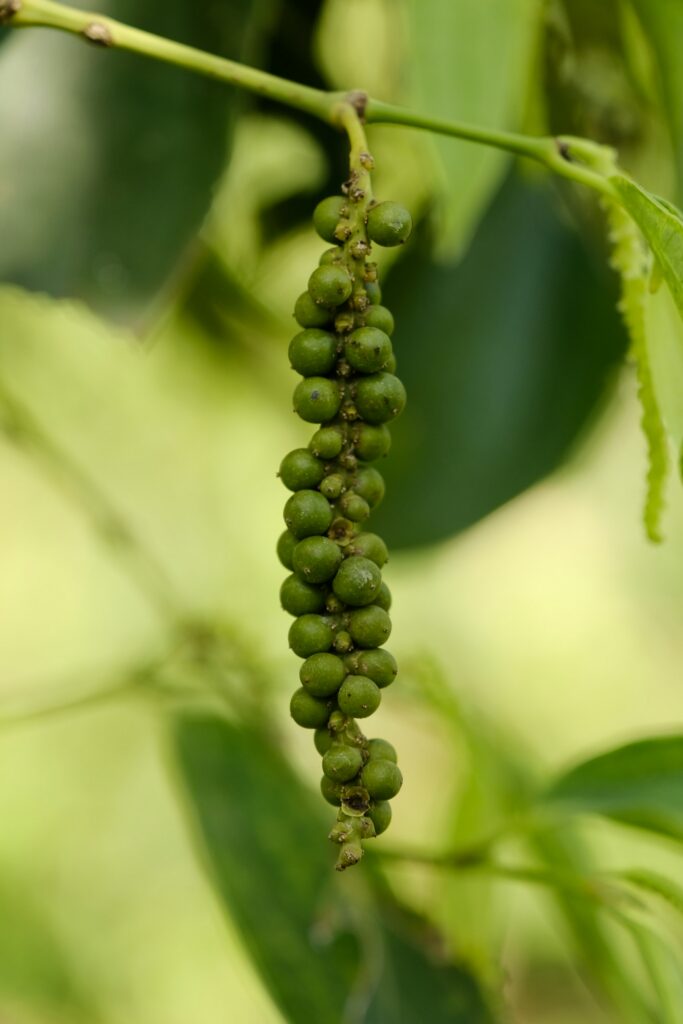
She showed me the green clusters that would be picked fresh and cooked whole with crab. She showed me the berries left on the vine until they turned deep red, then soaked and peeled to make white pepper. She crushed a single red peppercorn between her fingers and held it under my nose. It smelled like citrus and flowers and heat all at once. I have never thought about pepper the same way since.
The best travel moments happen when you venture beyond what the guidebooks recommend. That’s when you find places that feel like yours.
At noon, Chenda’s whole family appeared from somewhere: two daughters, a grandson who wanted to practice his English by asking me about football, and an uncle who had opinions about every Premier League team. We ate fried fish, morning glory with garlic, and a bowl of fresh green pepper stir-fried with squid that I still dream about. When I tried to pay, Chenda waved my money away and pressed a small cloth bag of red peppercorns into my hands instead.
I made the two o’clock bus with ninety seconds to spare. Sophal refused a tip, so I bought every bottle of water in his cooler. I still have half of that pepper in a jar on my kitchen shelf. I can’t bring myself to finish it.
Sunrise in Tam Coc
Three weeks later, in northern Vietnam, I tried to recreate the magic on purpose. That never works, by the way. I’d read that Tam Coc in Ninh Binh was best at sunrise, so I booked the earliest boat and arrived at the dock at 5:30 a.m., feeling very clever.
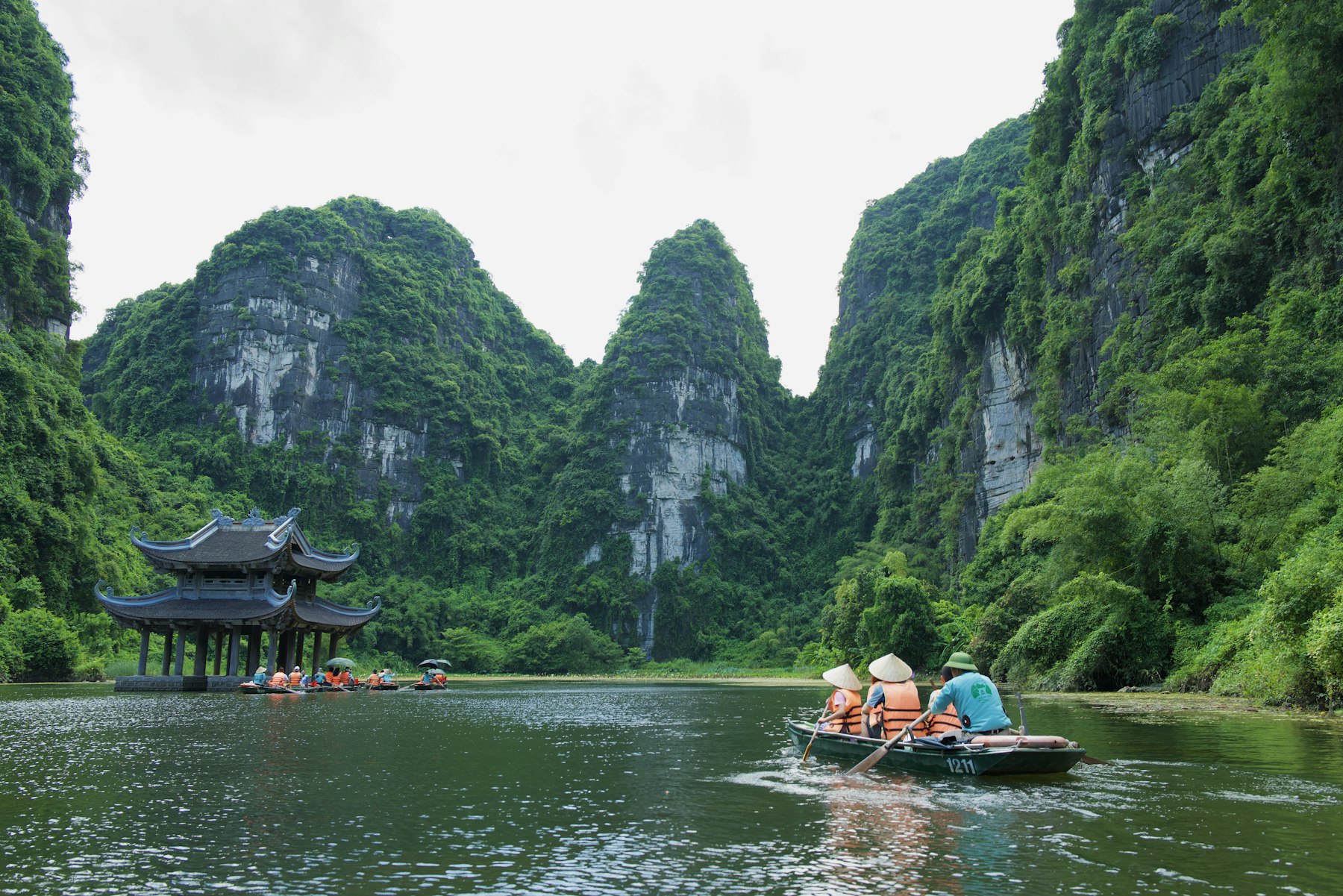
The rower assigned to me was a woman in her sixties named Bà Hoa. She was barely five feet tall, wore a conical hat and a faded floral shirt, and rowed with her feet. Not occasionally. The entire way. She sat at the back of the little metal boat, pushed the oars with her bare feet, and used her hands to pour herself tea from a thermos.
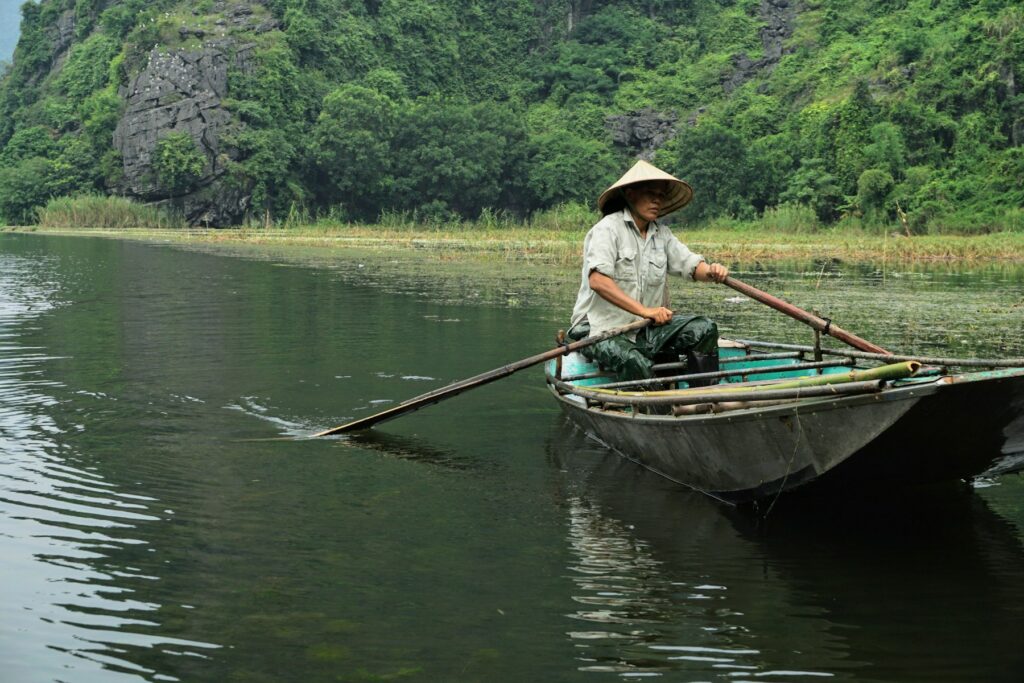
The river wound through rice paddies and straight into the base of the limestone cliffs, then disappeared into a cave. We drifted through total darkness for a minute, the only sound the dripping of water from the ceiling and Bà Hoa humming to herself. When we came out on the other side, the sun had cleared the karsts and the whole valley turned gold.
A heron lifted off the water right next to us. Bà Hoa pointed at it, pointed at the sky, and said one of the few English words she knew: “Lucky.”
She was right. I’ve thought a lot about why that morning felt so different from the pepper farm. I think it’s because in Kampot I had nothing planned, so everything was a gift. In Tam Coc, I’d planned the sunrise, but not Bà Hoa, not the heron, not the thermos of tea she shared with me on the way back. The plan got me to the river. The people made it worth it.
That’s what this list is really about. These places are beautiful, but more than that, they’re still small enough that you’ll meet the people who live there.
1. Kampot, Cambodia
While most travelers rush to Siem Reap, the riverside town of Kampot offers a slower pace—the same unhurried feel I later found in Portugal’s Alentejo. Known for its pepper plantations and crumbling French colonial architecture, it’s the perfect place to rent a scooter and explore the surrounding countryside. Visit a family-run pepper farm, take a sunset boat on the river, and save a day for nearby Kep and its famous crab market.
2. Ninh Binh, Vietnam
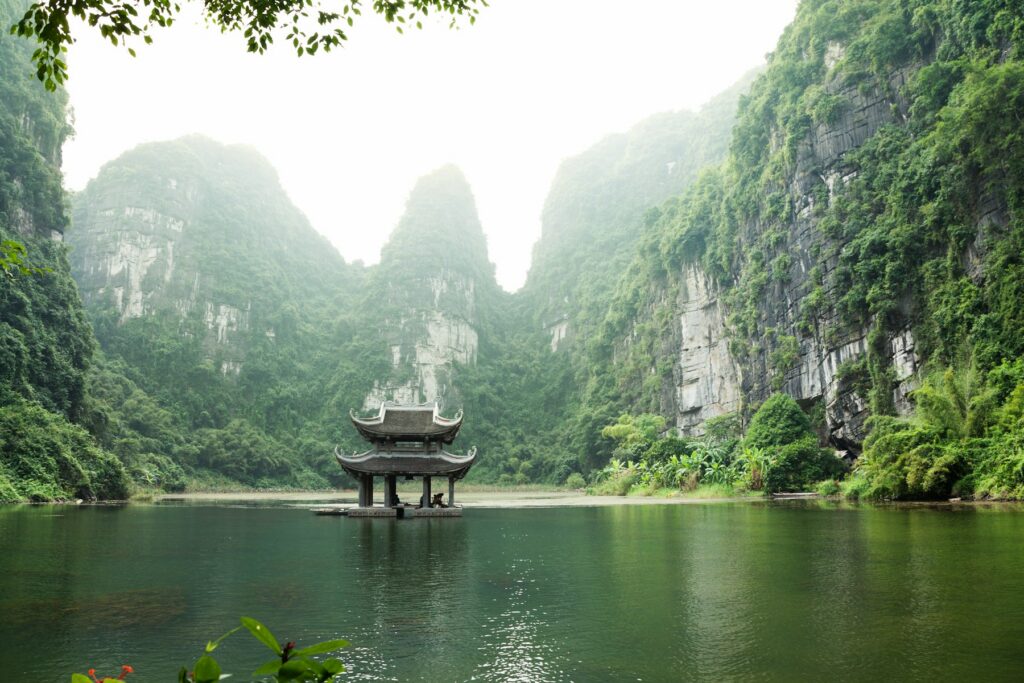
Often called “Halong Bay on land,” Ninh Binh’s dramatic karst landscapes are just as stunning but far less crowded. Boat rides through Tam Coc’s rice paddies and limestone caves offer peaceful beauty that’s hard to find in Vietnam’s more popular destinations.
Getting there
Ninh Binh is just two hours south of Hanoi by bus or train. Most travelers visit as a day trip, but staying overnight lets you experience the magical sunrise over the rice fields.
- Best time to visit: May to June when the rice paddies are lush green
- Don’t miss: Cycling through the countryside at dawn
- Where to stay: Tam Coc has plenty of family-run guesthouses
3. Nong Khiaw, Laos
A small village on the Nam Ou river, ringed by jungle-covered cliffs. Hike up to a viewpoint for sunrise above the clouds, then spend the afternoon doing absolutely nothing in a riverside hammock. Boats continue upriver to the even quieter village of Muang Ngoi.
4. Battambang, Cambodia
Cambodia’s second city has a thriving arts scene, a famous circus school, and colonial shophouses that haven’t been polished for tourists. Ride the “bamboo train,” a platform on wheels, through the countryside, and stay for sunset at the hilltop temples of Phnom Sampeau.
5. Phong Nha, Vietnam
Home to some of the largest caves on Earth. Even if you don’t book a multi-day expedition, the day trips into Paradise Cave and Phong Nha Cave are staggering. The village itself is laid-back, and the countryside is perfect for exploring by bicycle.
6. Nan, Thailand
Northern Thailand without the crowds of Chiang Mai. Nan has beautiful temple murals, a sleepy old town, and winding mountain roads that lead to tiny villages and tea plantations.
7. Siquijor, Philippines
A small island with a reputation for folk healers and mystery. Locals are proud of the legends. Visitors come for the waterfalls, quiet beaches, and roads you can circle in a single day on a scooter.
8. Kep, Cambodia
Kampot’s seaside neighbor. Eat freshly caught crab cooked with green Kampot pepper at the crab market, then hike the trail through Kep National Park for views over the Gulf of Thailand.
9. Ha Giang, Vietnam
The far north of Vietnam is all mountain passes, terraced valleys, and markets where different ethnic communities meet each week. The loop road is best done with an experienced local driver unless you’re a confident rider.
10. Koh Rong Sanloem, Cambodia
White sand, clear water, and very little else, which is exactly the point. It’s the quieter sister of Koh Rong, with a handful of bungalows and nights lit up by bioluminescent plankton.
Before you go
Small places run on small economies. Carry cash, eat at family restaurants, hire local guides, and ask before you take photos of people. Packing light makes hopping between these towns on buses and boats much easier. Learn “hello” and “thank you” in the local language. And leave at least one day of every trip completely unplanned. You never know who’ll be eating rice soup on the riverfront when you miss your bus—or who you might meet as a travel buddy on Wander before you even land.
Frequently asked questions
Are places like Ninh Binh and Ha Giang still hidden gems?
They are quieter than Bali or Bangkok, not empty. Backpackers know the Ha Giang Loop and Tam Coc boats, yet both still feel small enough that you meet locals, not only tour groups. Treat them as less crowded classics, and leave a day unplanned for the farm or rower who is not in any guidebook.
When is the best time to visit these Southeast Asia gems?
It depends on the country. Ninh Binh rice paddies glow from about May to June. Cambodia’s coast and islands are often friendlier in the drier months. Always check local rainy seasons before you lock buses and boats, and build slack for missed connections.
Do I need cash for Kampot, Kep, and similar towns?
Yes. Small places run on small economies. Carry cash for family restaurants, pepper farms, tuk-tuks, bamboo trains, and island bungalows where cards often fail. ATMs thin out once you leave bigger cities, so withdraw before the last bus or boat hop and keep a little spare for the unplanned farm visit.
How many of these places can I fit in one trip?
Fewer than you think if you want the slow mornings that make them special. Two or three bases with day trips beat a checklist of ten. Pack light for buses and boats, hire local guides, and leave one day blank. That blank day is usually the story you keep.
Keep reading
- Svaneti Georgia: towers, a missed van, and a long table: the same missed-transport plot, swapped for Caucasus towers and kubdari
- First time traveling solo? Here’s what I wish I knew: mindset for showing up alone when the next bus is hours away
- How Sarah met her travel buddy on Wander: how to line up a travel buddy before you land in a new region
Planning a loop through a few of these places? Find a travel buddy on Wander before you go: download it free and match by dates and interests.
Travel with Wander
Don’t go alone. Match with travelers who share your dates, pace, and places before you fly.